I measure every pan before I buy it.
Quarter sheet pans run 9 × 13 inches, half sheets are typically 13 × 18 inches, and full sheets measure 18 × 26 inches, though I’ve seen half sheets labeled anywhere from 12 × 16 to 13 × 18 inches depending on brand.
Bottom dimensions matter more than rim measurements, so grab a tape measure and check the actual interior.
Inexpensive pans often round up.
Most home bakers use 2-inch depths, but 3-inch pans give cakes room to rise tall without doming.
A quarter sheet feeds 24–26 people, half sheets serve 34–38, and full sheets handle 96 guests at standard 2 × 2 inch portions.
Double those numbers if you’re stacking layers.
Depth changes baking time and structure, and certain brands label their pans more accurately than others.
What Do Quarter, Half, and Full Sheet Cake Pan Sizes Actually Measure?
Why do we call a pan “half” a sheet when the numbers never seem to halve cleanly? I’ve asked myself this every time I’ve stared at pan sizes in a store aisle, wondering if I’m buying the right thing.
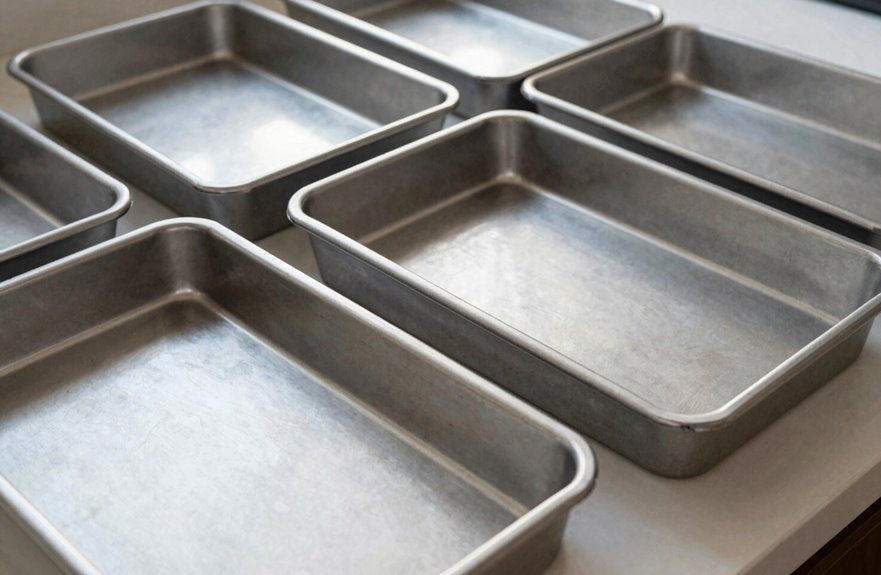
A quarter sheet measures 9 × 13 inches, compact and familiar, the workhorse of potlucks. A half sheet typically runs 13 × 18 inches, though I’ve seen brands label 12 × 16 or even 11 × 15 as “half.” The full sheet stretches to 18 × 26 inches, often just 1–2 inches deep.
The names suggest simple math, but these dimensions aren’t halves or quarters of each other. Vendors mislabel constantly. I’ve stopped trusting the words “quarter,” “half,” or “full” on packaging. Check actual length, width, and depth instead.
Why Your “Half Sheet” Pan Probably Isn’t: And How to Check Real Dimensions
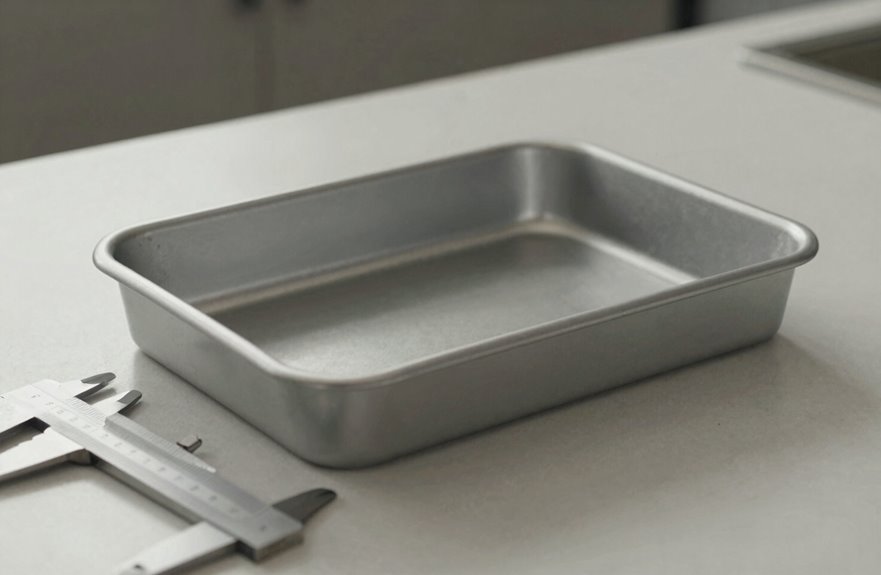
Three times last month, I pulled a pan from my cabinet based on the “half sheet” label stamped on the rim, only to find it sitting crooked in my commercial rack or leaving awkward gaps at catered events. Sheet pan dimensions frequently don’t match their labels.
That “half sheet” might measure 12 x 16 inches, 13 x 18, or something else entirely. Vendors round, mislabel, and confuse top rim measurements with bottom size. Your pan’s bottom size determines whether it fits your equipment, not the name.
For measurement accuracy, use a tape measure. Check the actual interior bottom dimensions, not the stamped label. Compare against your rack specs. Brands like Cambro label by bottom size but list rim dimensions separately, creating confusion.
Verify before you bake. Use numbers, not names.
How Deep Should Your Sheet Cake Pan Be: 2 Inch or 3 Inch?
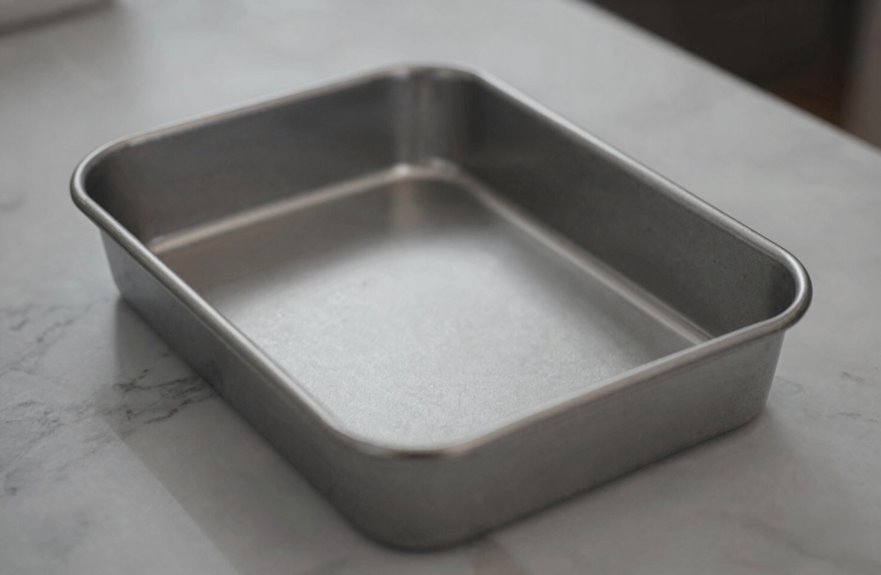
Exactly how deep does a sheet cake pan need to be? I’ve wrestled with this question myself, and the answer depends on what you’re baking.
Most bakers reach for 2 inches depth. It’s the standard. Recipes expect it. Servings calculate around it. But 3 inches offers something valuable: room to grow.
What matters most:
- Structure . 3 inches gives taller cakes stability, less doming, cleaner edges
- Capacity . Deeper pans hold more batter per layer, changing your yield
- Versatility . 2 inches fits standard recipes; 3 inches adapts to specialty needs
When I shop, I ignore “quarter” or “half” labels. I check actual bottom dimensions and stated depth. Some vendors round. Some mislead. Know your sheet cake pan and match depth to purpose for consistent results.
How Many People Does Each Sheet Cake Pan Size Actually Feed?
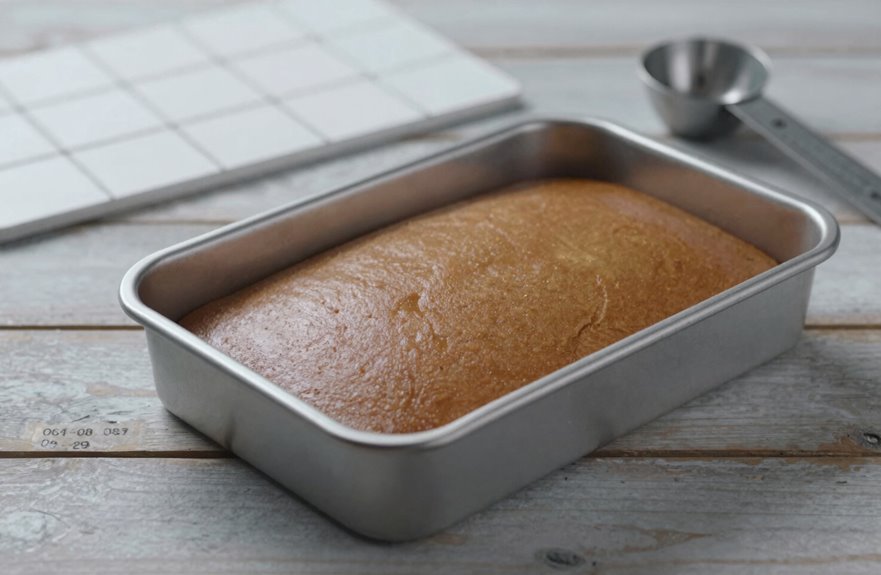
Once I’ve chosen the right depth, I turn to what everyone actually asks: how many servings will this produce.
Here’s the breakdown by sheet cake sizes and pan dimensions:
- Quarter sheet (9 x 13 inches): 24–26 servings
- Half sheet (13 x 18 inches): 34–38 servings
- Full sheet (18 x 24 inches): 96 servings
These numbers assume a single layer cut into standard 2 x 2 inch slices. Add a second layer and you’ll roughly double those servings, though larger slices work better since the cake becomes thicker and heavier.
A single layer yields standard servings; double the layers and you’ll roughly double the count, though larger slices suit the added heft.
Your actual count depends on how generously you cut. Party slices run smaller; wedding portions are tinier still. The standard 2 x 2 inch cut provides a reliable planning baseline and delivers consistent portion sizes without complicated calculations.
Which Sheet Cake Pan Brands Bake Even and Hold Up Long-Term?
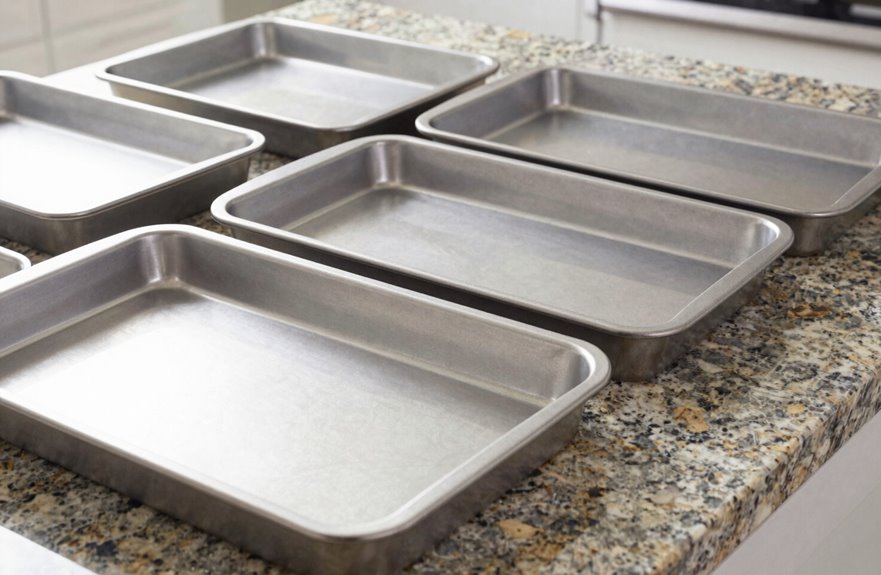
Which brands actually deliver on their promises? I’ve tested enough sheet pans to know that not all durable pans are created equal. When you’re baking for a crowd, you need dimensions you can trust and heat distribution that won’t fail you.
What I’ve learned about finding pans that bake even and last:
- Nordic Ware: Their 13×18 sheet pans feature shallow 1-inch sides with rounded corners. No burnt edges, easy release. These are workhorses in home kitchens.
- Fat Daddios ProSeries: Made from 3003 premium aluminum with anodized finishes, these come in 2, 3, and 4-inch depths across all standard sizes. Heat conduction stays consistent through hundreds of bakes.
- Check actual exterior dimensions: Don’t trust labels alone. Measure your oven first, then verify. Brands round numbers, and I’ve seen “half-sheet” pans vary by critical inches.
Sheet pan extenders can convert these into deeper cake pans when you need versatility without buying more equipment.