Carrot cake banana bread tastes like warm spice and soft, dense sweetness, with carrots adding an earthy chew you never get from banana bread alone. Most versions take about an hour to bake and cool. The catch is that every swap, vegan, gluten-free, lower sugar, costs you something in texture, and the article tests six of them so you know which trade you’re making before you preheat. One baker found her 1:1 gluten-free flour turned out dense and flat, so the blend you pick matters more here than in most loaves.
What Carrot Cake Banana Bread Is
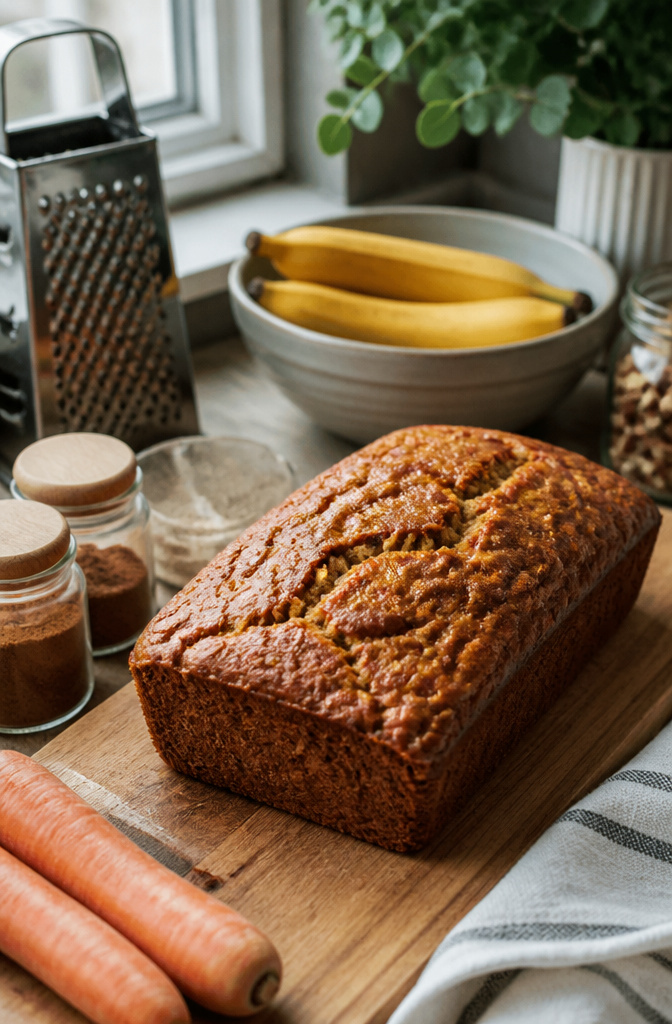
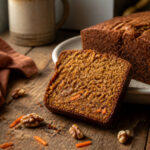
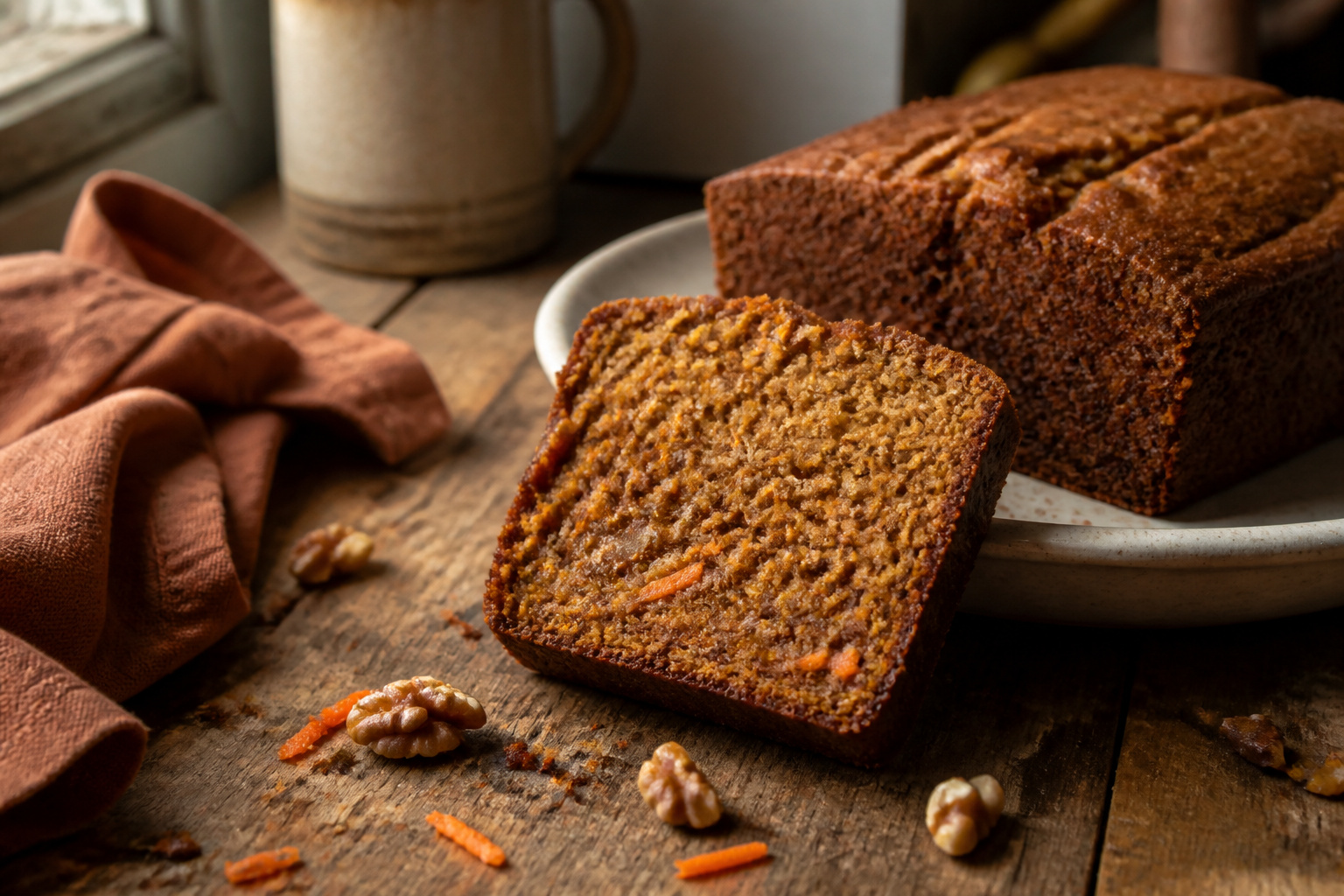
Carrot cake banana bread is what happens when two standby loaves collide into one. Ripe bananas and freshly grated carrots share the same batter, each doing work the other cannot. The bananas keep the crumb sweet and dense; the carrots add moisture and a faint chew that plain banana bread never quite reaches.
Most recipes build on the usual quick-bread foundation: all-purpose flour, eggs, oil, baking soda or powder, and warm spices borrowed straight from carrot cake, cinnamon, ginger, cloves. Cream cheese frosting is optional but common, and the loaf works either way. The combination makes sense once you taste it: both bakes rely on soft, nearly wet fruit or vegetable matter to carry the structure, so the merge is less of a stretch than it sounds.
The Ingredients
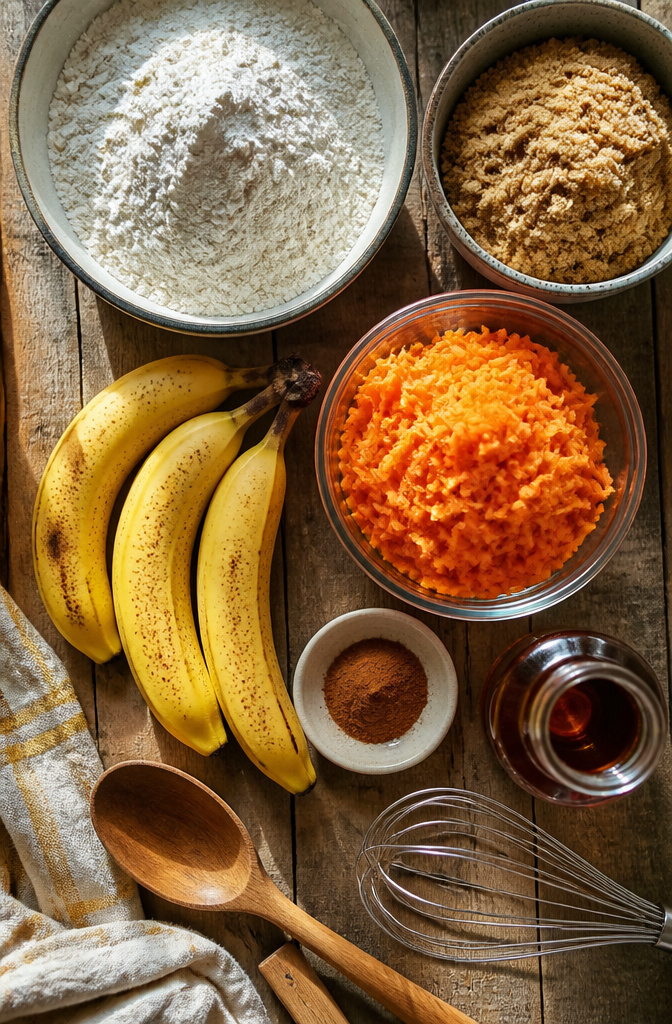
Two or three medium ripe bananas give you one to one and a half cups mashed, which is the moisture base that makes this bread banana bread rather than just carrot cake in a loaf pan. Grate two to three medium carrots down to one cup; the shreds disappear into the crumb during baking but leave behind that earthy sweetness and flecks of color.
Most versions build the batter with all-purpose flour, though whole wheat pastry flour swaps in neatly if you want a slightly denser crumb. Two large eggs bind everything, and a quarter to half cup of oil or melted butter keeps the loaf tender. Brown sugar is the standard sweetener, but maple syrup works if you prefer its quieter, more complex sweetness.
Baking soda and baking powder both go in, about one teaspoon of each, plus cinnamon and a small amount of nutmeg or ginger for the warm spice profile that reads "carrot cake." A teaspoon or two of vanilla rounds it out.
Optional add-ins are where you make the loaf yours. Chopped walnuts or pecans add crunch, raisins bring pockets of chew, and unsweetened shredded coconut layers in another texture. I tend toward pecans and skip the coconut, but the batter accepts any combination without complaint.
Preheat and Prep
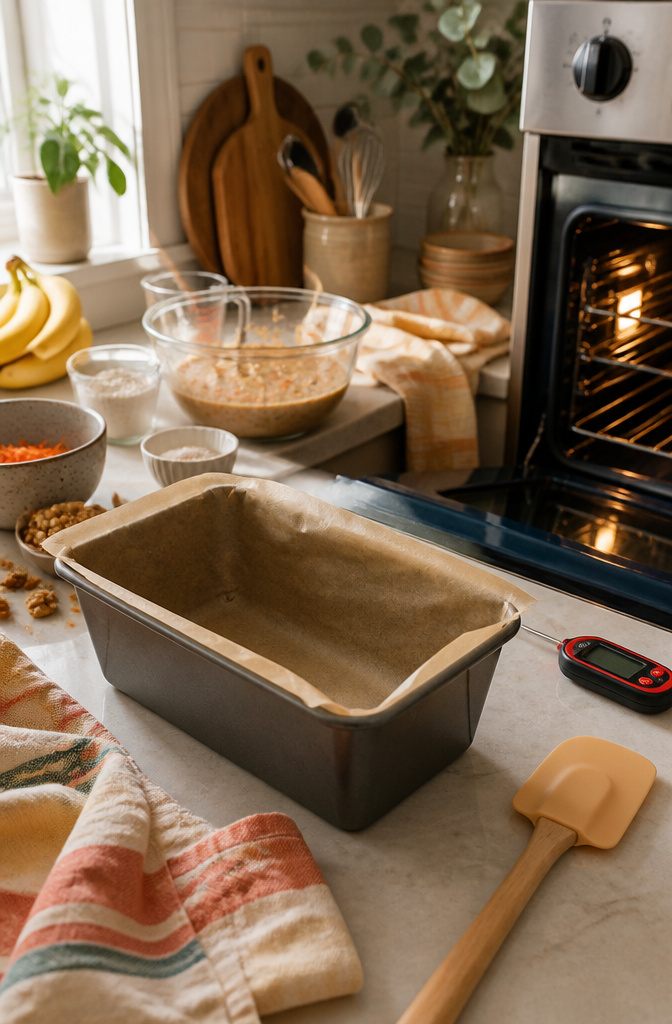
The oven needs to hit 350°F for most versions, though a couple of the tested recipes push to 375°F for a slightly faster crust set. A 9×5 loaf pan is the standard fit, and lining it with parchment beats greasing alone if you want the loaf to release in one piece. The parchment overhang becomes handles you can lift straight out, which matters more than you’d think with a dense, moist crumb that likes to cling. I set the paper in with a smear of oil underneath to keep it from sliding while I fill; without that, the corners bunch and batter sneaks underneath.
Mash and Grate
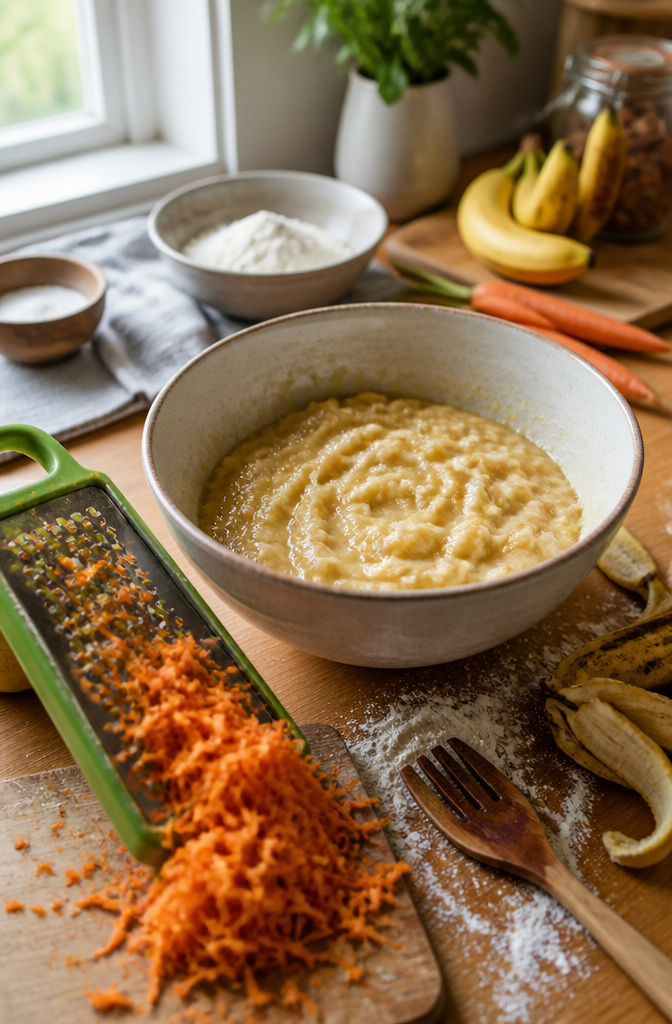
Ripe bananas break down differently depending on how spotted they are. I mash them with a fork until they reach an applesauce texture, which takes about a minute for three to four medium bananas. Lumps left behind turn into gummy pockets once the bread bakes, so smooth matters more than fast here.
Carrots are the opposite story. Grating them fresh keeps the moisture light and evenly dispersed; pre-shredded bagged carrots carry less water and can read dry in the finished loaf. Two to three medium carrots yield roughly one cup, and I leave the peel on for the extra fiber and color. The shreds should be fine enough to disappear into the crumb, not so chunky they sink.
Some recipes add the carrots straight to the mashed bananas and stop there. Others whisk eggs and sugar first, then fold the mash and grate in after. The wetter your bananas, the less the order seems to matter. With borderline bananas, I have had better luck combining them with the carrots early so the moisture can even out before flour hits the bowl.
Wet Ingredients
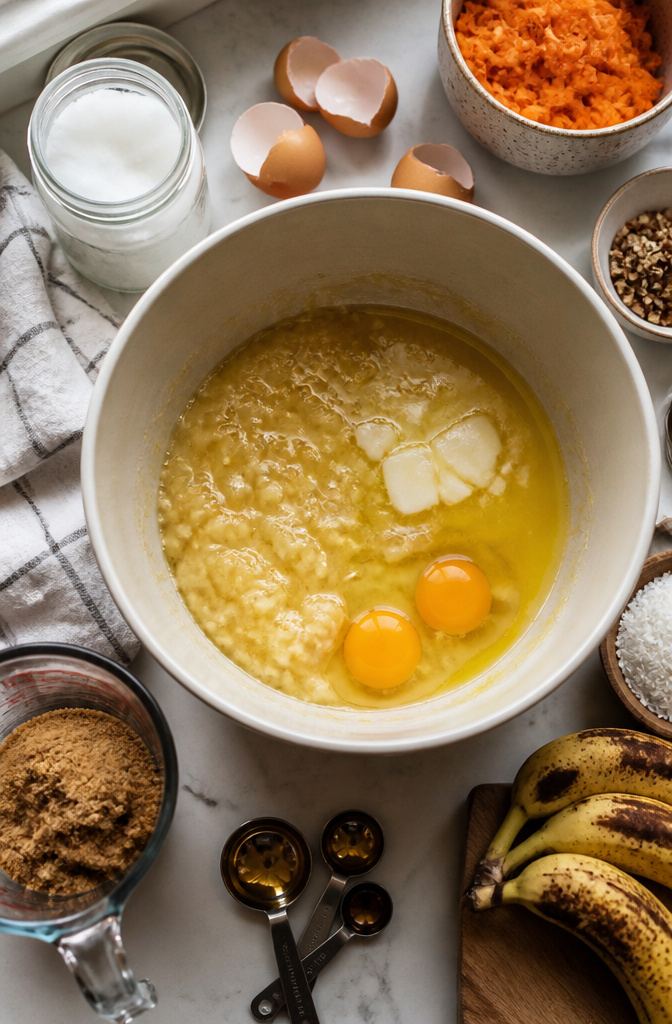
Two eggs go in next, then the fat and the sweetener. Melted coconut oil works here, though any neutral oil or melted butter does the same job if that is what sits in the pantry. A quarter cup of honey or maple syrup brings the moisture, and maple syrup keeps the crumb noticeably softer the day after baking. Brown sugar or coconut sugar, measured at half a cup, deepens the flavor toward something closer to actual carrot cake. Two teaspoons of vanilla extract round it out. The eggs, oil, sweetener, and vanilla all get beaten into the mashed banana and grated carrots until the mixture looks uniform. No electric mixer needed, just a wooden spoon and a minute of stirring. The batter stays loose and slightly streaky from the carrot, which is exactly how it should look before the dry ingredients meet it.
Dry Ingredients
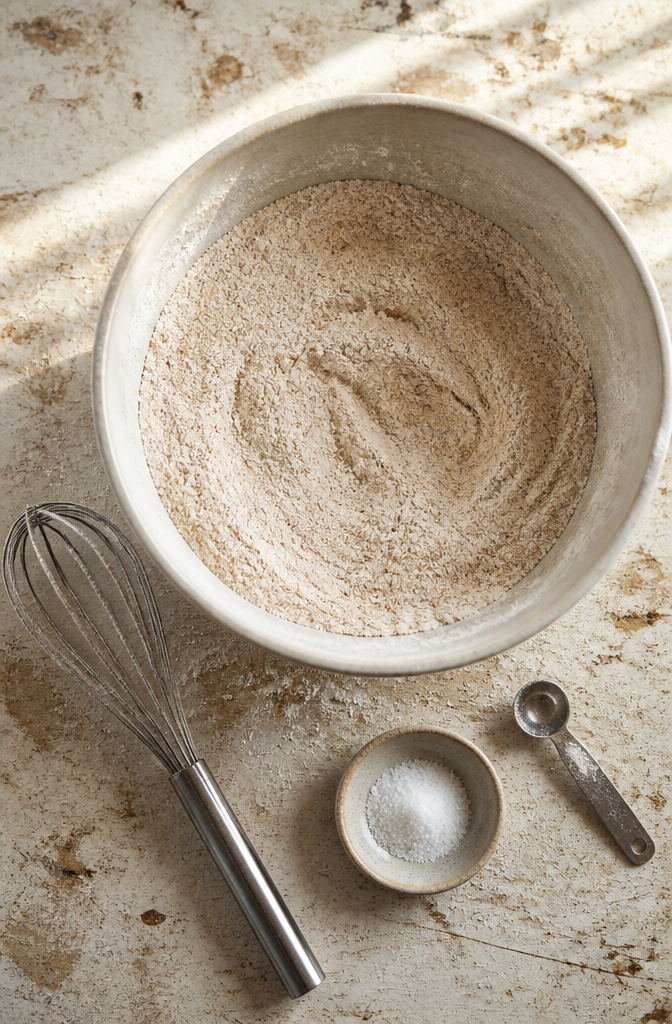
A separate bowl for the dry ingredients keeps clumps of leavening or spice from showing up as bitter pockets in the finished loaf. I whisk together all-purpose flour, baking soda, baking powder, and the spice set: cinnamon, nutmeg, and ginger are the standard lineup, though one version I kept coming across adds allspice and cloves, and another throws in cardamom and black pepper. The whisk does more than combine; it breaks up the baking soda, which likes to ball up in humid kitchens, and distributes the ginger evenly so one bite doesn’t taste like a spice jar fell on it. Salt goes in here too, even when the recipe doesn’t shout about it. I used to dump everything straight into the wet bowl to save a dish, and I still remember the loaf that hit a pebble of baking soda in slice three. Now the extra bowl stays.
Combine Without Overmixing
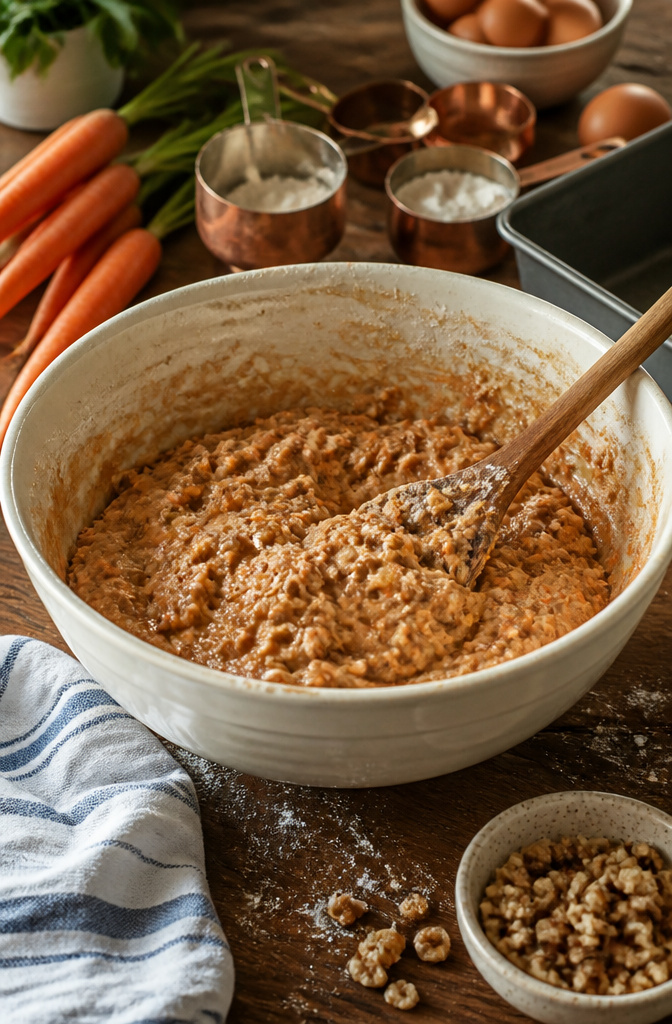
Adding dry ingredients to wet in two or three batches gives you more control than dumping everything at once. The first batch looks like a mess, and that is fine. Stir it roughly until the flour just disappears, then scrape the sides and add the next batch. By the final round, a few streaks of flour and small lumps should still be visible in the bowl. That slightly lumpy texture is what you want; it means the gluten in the flour has not been overworked.
Overmixing is the main reason carrot cake banana bread turns out dense or tough. Once the wet and dry components meet, every extra stroke develops more gluten structure, and this batter does not need bread-level chew. Stop while the mixture still looks a little shaggy. The carrots and any nuts or coconut you add later will finish blending in without extra stirring, so resist the urge to chase perfect smoothness. A batter that looks too uniform usually signals you have gone too far.
Fold In Extras
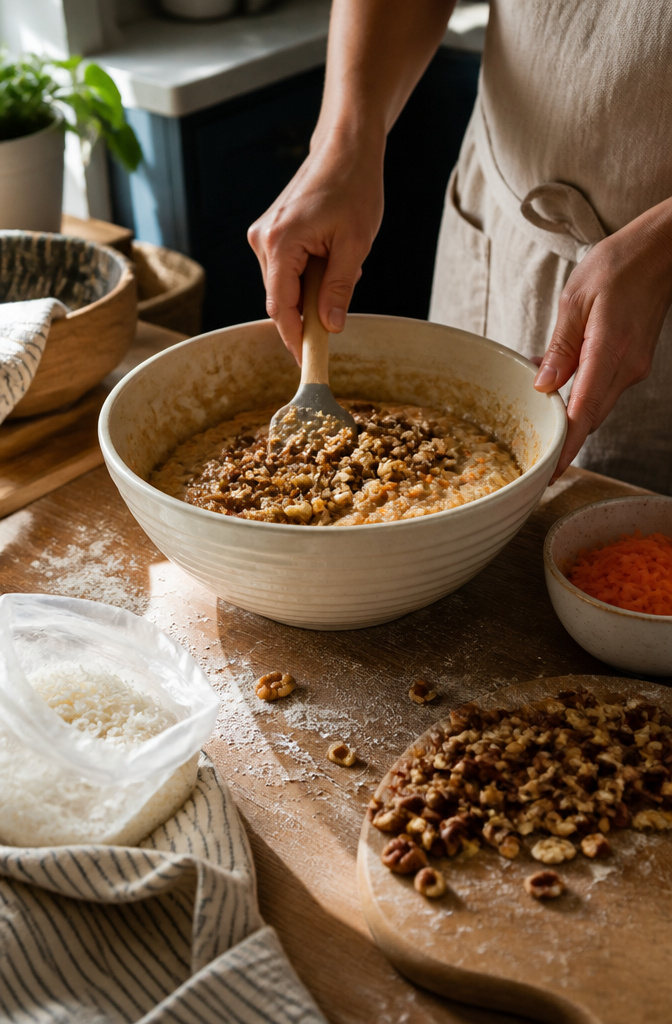
Add-ins turn the base batter into something worth arguing over at the table. Walnuts and pecans are the standard choice, roughly a handful stirred in at the end. Either works; I reach for walnuts when I want the slightly bitter edge they carry against the sweetness, and pecans when the bananas were borderline green and the loaf needs richer depth. Raisins, chopped dates or dried apricots fold in the same way, though they will soften and swell in the moisture of the batter, so they distribute more easily if you separate them with your fingers first.
Coconut is where opinions split. Some testers love the texture of unsweetened shredded coconut folded through each slice; others pick around it or skip it entirely. If you do use it, stir it in just after the nuts but do not overwork the batter. A few more turns of the spatula than necessary and the gluten starts tightening; the loaf turns rubbery instead of tender. Fold until you see no streaks, then stop and get the pan into the oven.
Bake and Test
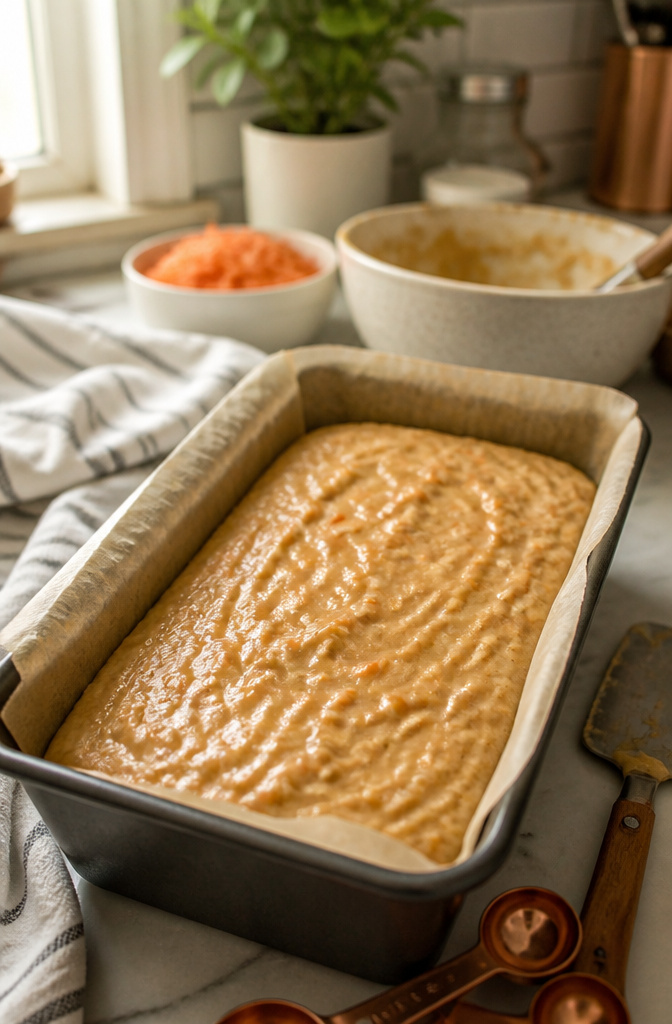
The batter goes into the prepared pan in one pour, then gets spread to the corners with the back of a spoon so the top is reasonably level. Bake 45 to 70 minutes, though the exact minute depends on whether you are using a standard 9-by-5-inch loaf pan or something smaller. A toothpick inserted dead center at the 45-minute mark should come out clean or with just a few moist crumbs clinging to it. If the top is browning faster than the middle is setting, lay a sheet of foil loosely over the pan and keep baking. I have pulled loaves at 50 minutes that were perfect and others that needed the full hour, so the toothpick test matters more than the clock.
Cool Before Slicing
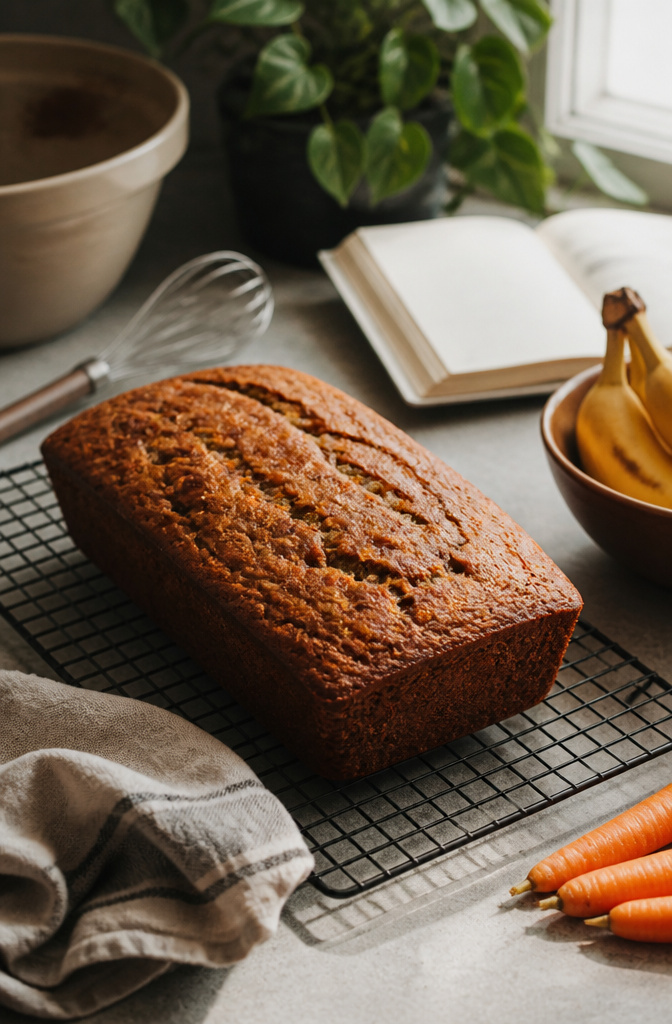
The loaf needs time to settle. Leave it in the pan for 10–15 minutes, then turn it out onto a wire rack and wait until it is fully cool before you cut a slice.
Warm bread gums the knife and crumbles under pressure. The interior is still steaming itself into its final texture during that rest on the rack, so the crumb firms up rather than breaking apart. I’ve learned this from reading enough recipes where the same warning keeps appearing: slice too soon and the loaf splits along fault lines you created yourself.
If you need to frost the top, a warm base turns cream cheese into a runny mess. Let it cool completely. The wait is dull, but the clean slice you get afterward is the difference between a keeper recipe and one you blame on the batter.
Frost or Leave Plain
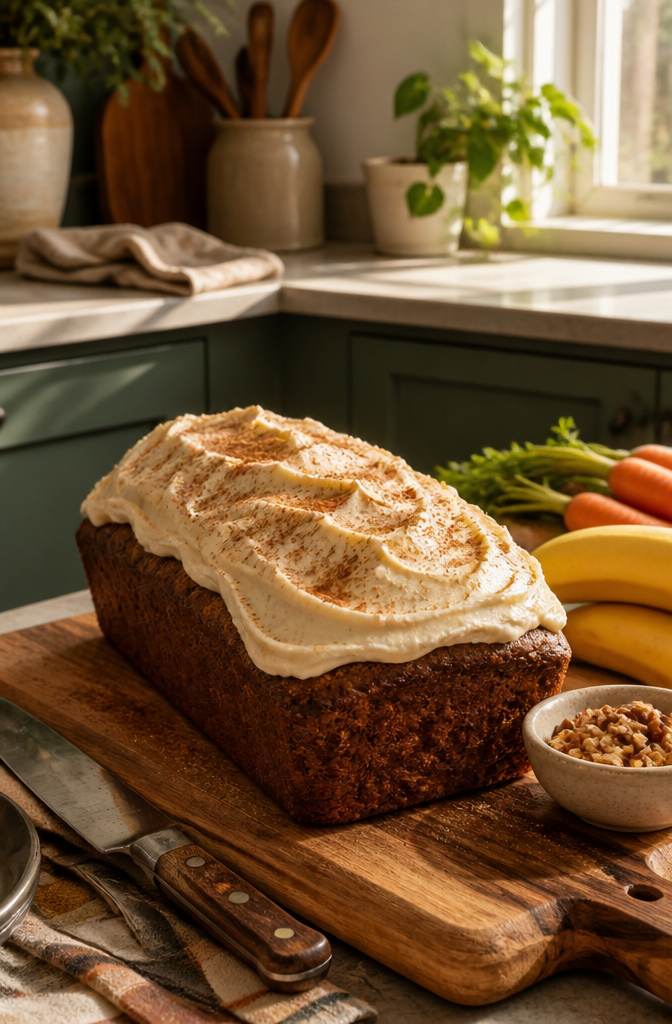
Cream cheese frosting is the move if you want the full carrot cake treatment. Two ounces of cream cheese, two tablespoons of softened butter, three-quarters of a cup of powdered sugar, and a splash of vanilla beaten until smooth does the job. A hand mixer set to medium speed gets it light and fluffy without a lot of arm work.
The lighter route is a yogurt glaze, made with nonfat vanilla yogurt thinned just enough to drizzle. It reads as tangy-sweet rather than rich, and the whole thing feels more like a quickbread you could eat at nine in the morning without a second thought.
Some mornings I skip the topping entirely. The bread carries enough moisture and spice on its own, and one less step means one less bowl to wash.
Wait until the loaf is fully cool before you frost or glaze. Warm bread turns cream cheese into a melted slide and sends yogurt glaze running straight to the plate. I give mine at least an hour on the rack, sometimes longer if the kitchen’s humid. The surface should feel room-temperature all over, not just on top.
Classic Version
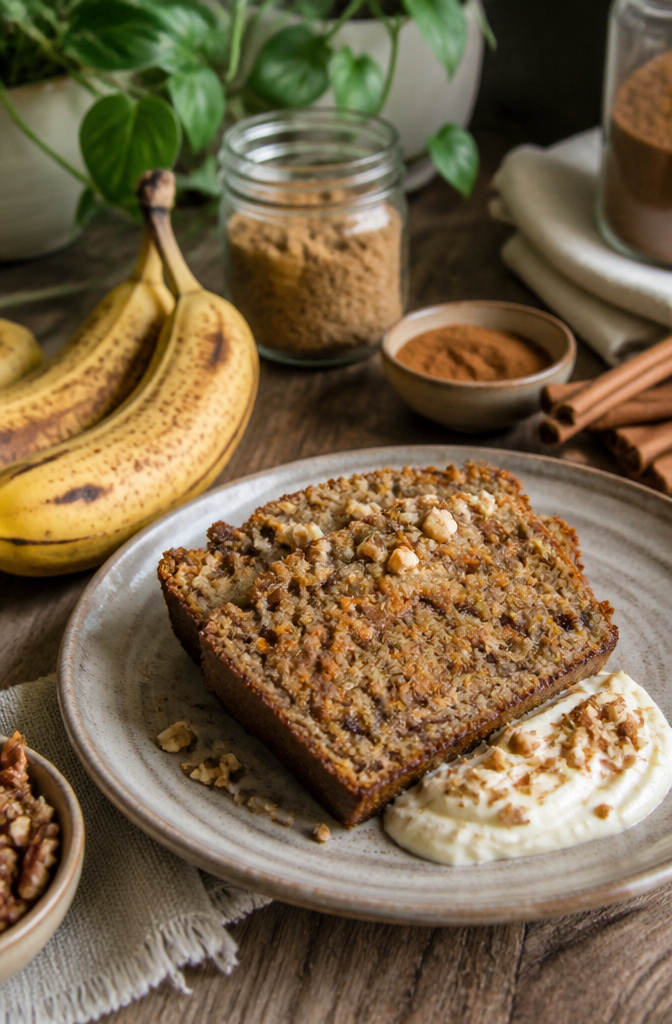
Two medium-sized overripe bananas, about 200 grams without the peel, form the base of what this blend is after. Brown sugar, anywhere from 1 cup to 200 grams depending on how you measure, carries deeper molasses notes than granulated ever would. Dark or light both work, though dark gives the loaf more of that carrot-cake depth.
All-purpose flour runs 220 grams, or 1¾ cups if you are sprinkling and leveling rather than scooping. A teaspoon of baking soda and 1½ teaspoons of cinnamon anchor the rise and warmth, with a quarter teaspoon each of clove and ginger for the carrot-cake side of the family. Some bakers stop at cinnamon; adding both clove and ginger is what makes the bread taste like both parent recipes, not just banana bread with orange flecks.
Oil keeps it moist, anything flavorless, about 100 grams or half a cup. Greek yogurt or sour cream at 60 grams, a quarter cup, adds tenderness without the heaviness of more oil. One cup of coarsely chopped walnuts or pecans is optional but expected; the crunch belongs to the tradition even if your branch of the family leaves it out.
Healthy Version
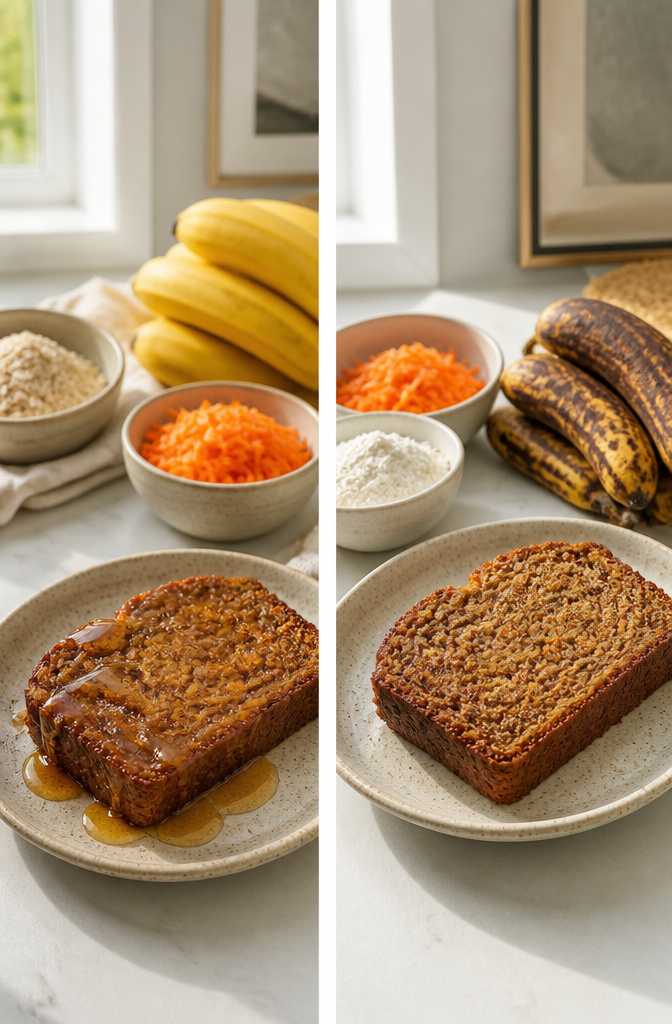
White whole wheat flour or whole wheat pastry flour can stand in for all-purpose without turning the loaf into a doorstop, though the crumb ends up tighter and the color drifts toward brown. The bananas carry more weight here than they do in the classic version. Three medium overly ripe ones, mashed to about one cup, supply enough moisture to keep the texture from going dry, but the window is narrow: bananas that are merely spotted rather than brown-spotted will leave you with a dense brick.
Coconut sugar at half a cup replaces the usual white sugar in one version I worked from; another drops the sweetener to a quarter cup of honey or maple syrup and lets the fruit do more of the work. Both loaves read as breakfast rather than dessert, which is the point if you are slicing this at 7 a.m. rather than serving it after dinner.
A quarter cup of unsweetened applesauce can replace half the oil. The trade is straightforward: you lose a little richness, you gain a softer crumb and fewer calories. Melted coconut oil still shows up in many of the healthier recipes, but at quarter-cup volume instead of the half-cup you might see in a more indulgent loaf. Carrots stay at a full heaping cup, roughly 100 grams grated, because their moisture matters as much as their flavor in a dough that is already working harder to stay tender.
Vegan Version
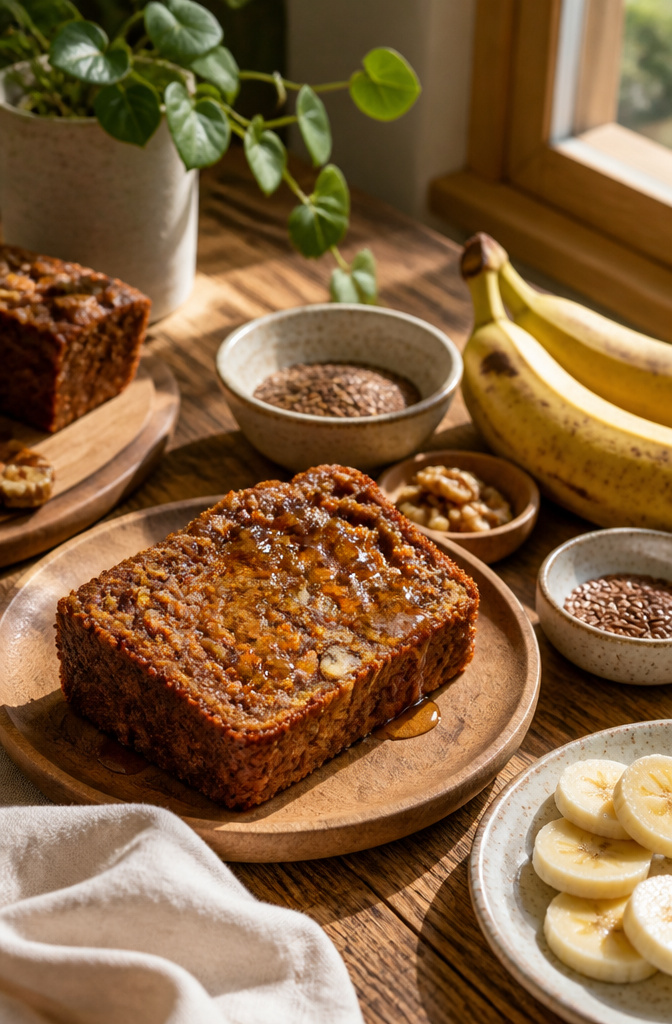
Flax eggs pull off the same binding job with a small sacrifice in structure. 1 tablespoon ground flaxseed plus 3 tablespoons water per egg, stirred and left to gel for five minutes, gives the loaf its lift. Applesauce works too and adds moisture, though the crumb turns softer and more pudding-like in the center.
Plant-based oil replaces butter with no drama, coconut oil or melted vegan butter both slip right in. Sugar needs one check: conventional white sugar is sometimes filtered through bone char, so anyone strict about that should reach for organic cane sugar or coconut sugar, both of which the original recipes list.
The finished loaf is slightly more tender and less structured than the egg version. It slices cleaner after a full cool, and the middle sets best when you resist opening the oven early.
Gluten-Free Version
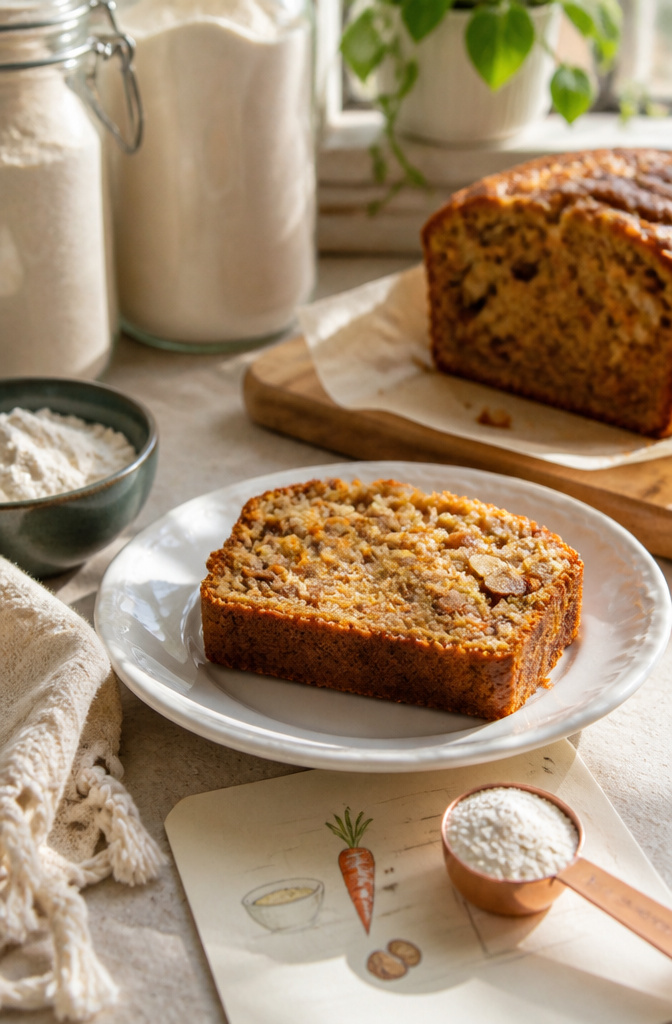
A 1:1 gluten-free flour blend replaces the all-purpose measure for measure, and the blend needs xanthan gum in the ingredient list if the finished loaf is going to hold together. King Arthur Measure for Measure and Bob’s Red Mill 1-to-1 are the ones that show up in kitchen tests most often, though oat flour works too if that is already in the pantry. The oat route needs an extra 2 tablespoons by volume because it is lighter, and the batter benefits from a longer rest, about 20 minutes, to let the oats hydrate.
With any gluten-free swap the crumb turns out slightly more compact than the wheat version. A 10-minute rest before sliding the pan into the oven softens that difference noticeably; the flour gets time to drink up the liquid from the bananas and carrots instead of fighting it in the heat. I still do not expect the same open crumb I would get from all-purpose, but the flavor lands, and the slices stay together once the loaf is fully cooled.
Frosted Version
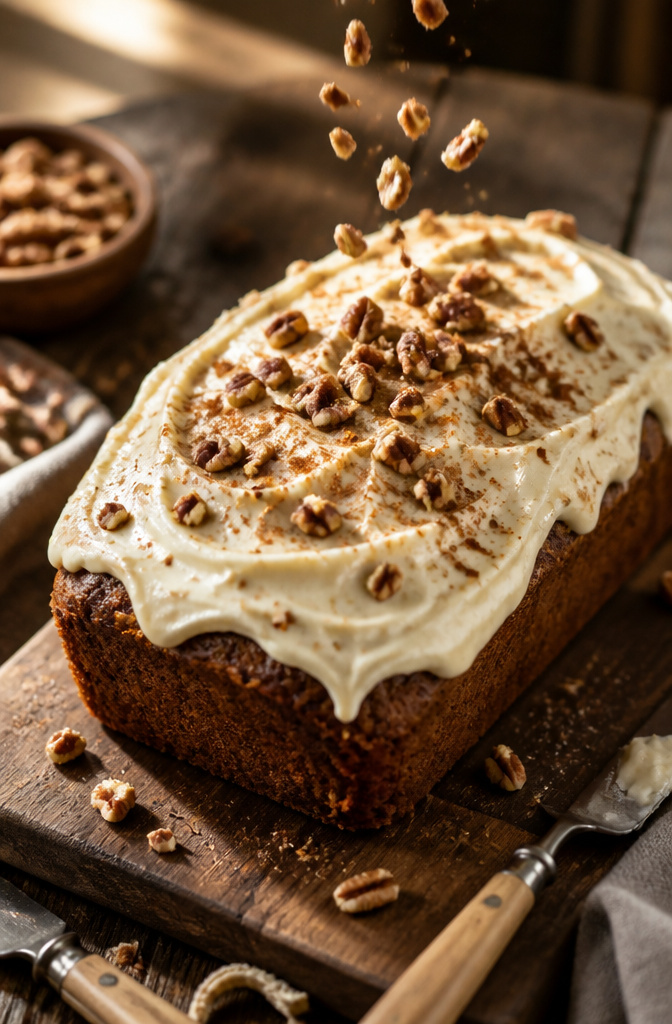
The thick layer of cream cheese frosting is what moves this loaf from the breakfast table to dessert. I spread it on generously once the bread has cooled fully, not warm, or the frosting slides right off into a puddle. A full coating across the top, plus a handful of chopped pecans or walnuts pressed in while the frosting is still soft, gives it the look of a proper carrot cake without the fork-and-plate ceremony.
The frosting itself benefits from a pinch of cinnamon. Cinnamon in the cream cheese frosting bridges the two flavors — the carrot cake spice and the banana sweetness — so neither side wins at the other’s expense. Some bakers keep the loaf unfrosted, wrap it in plastic and foil, and freeze it for up to three months; the frosting goes on after thawing, which saves refrigerator space and keeps the cream cheese layer fresh.
Ingredient Substitutions
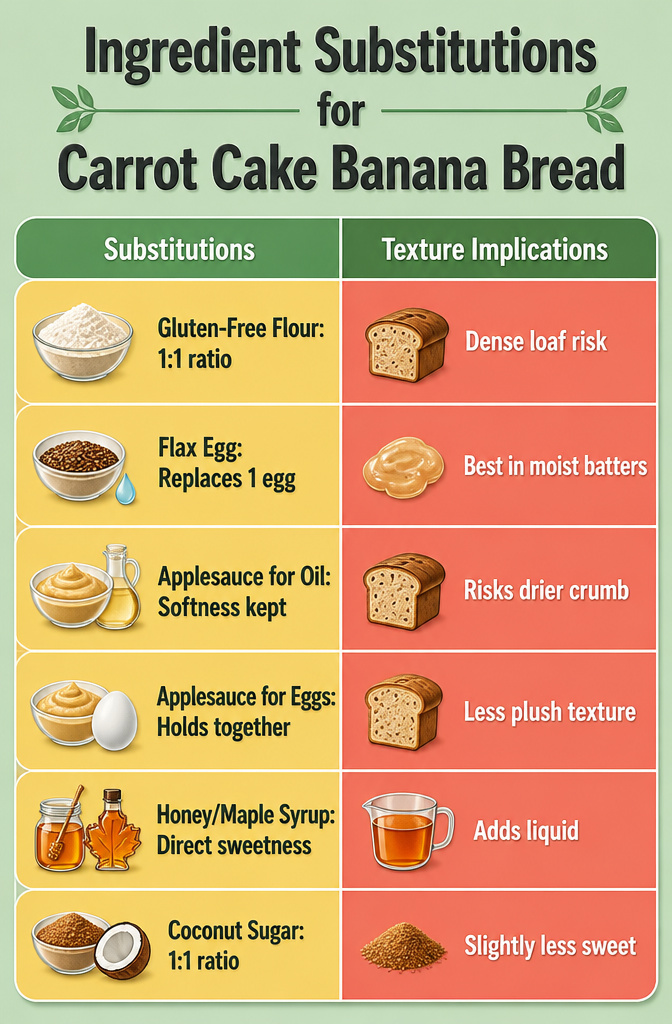
Most swaps in carrot cake banana bread come with a texture trade-off you should know about before you commit.
- 1:1 gluten-free flour works in place of all-purpose, and King Arthur Measure for Measure or Bob’s Red Mill 1-to-1 Baking Flour are the blends most often tested. One baker found her recipe did not convert well at all with a 1:1 gluten-free flour, so if the loaf comes out dense, the flour is likely why.
- Flax egg (milled flaxseed plus water, left to sit 5 minutes until gelatinous) replaces one large egg cleanly. Works best in an already-moist batter.
- Applesauce for oil keeps the bread soft but risks a drier crumb; oil helps prevent drying out, so a full swap sacrifices some of the tenderness.
- Applesauce for eggs sits in the same territory. The loaf holds together, yet the texture turns less plush than with egg or even flax.
- Honey or maple syrup for brown sugar shifts the sweetness from molasses depth to something more direct. Maple brings its own note; honey does too, and both add liquid the original sugar did not.
- Coconut sugar for granulated drops in at a 1:1 ratio with a faint caramel undertone and slightly less sweetness.
Storage and Freezing
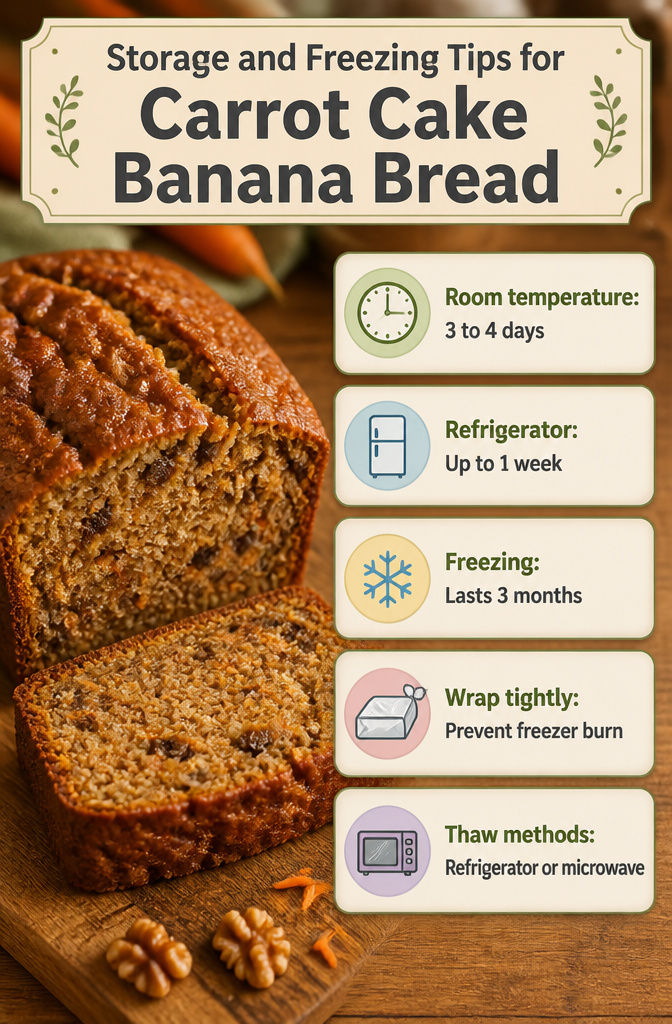
A cooled loaf of carrot cake banana bread sits on the counter wrapped in plastic or tucked into an airtight container for three to four days before the cut face starts to stale. The refrigerator stretches that to a full week, though the trade is real: the cold pulls moisture faster, and the crumb firms up. Some bakers actually prefer it that way, finding the chilled slice denser and the spice more pronounced.
Freezing buys you three months. Wrap the loaf or individual slices tightly in plastic first, then in foil for a second seal against freezer burn. Thaw overnight in the refrigerator, or microwave a single slice for twenty to thirty seconds if patience fails. The toaster oven works too, and the edges crisp while the center stays soft.
Baking Tips
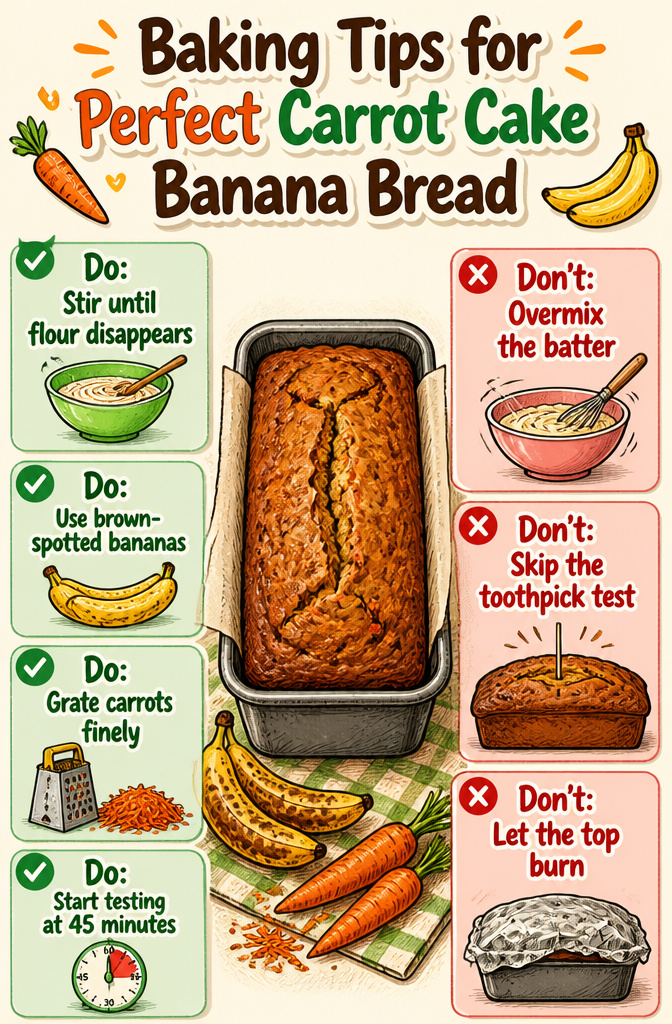
A few moves make the difference between a dense, even loaf and one that sinks in the middle or turns out gummy.
- Stir until the flour just disappears. The batter should still look a little rough; overworking it develops gluten and leaves you with a tough, chewy crumb rather than something tender.
- Brown-spotted bananas are non-negotiable. They carry the moisture and sweetness that lets you use less added sugar, and their soft texture mashes into the batter without lumps.
- Grate carrots on the fine side of a box grater. Large shreds are too heavy; they drop through the batter and create wet, underdone pockets near the bottom of the pan.
- Start testing at the minimum bake time, 45 minutes in most ovens. A toothpick inserted dead center should come out with no wet batter clinging to it; if it does, check again every 5 to 10 minutes.
- If the top is already deep brown before the middle sets, lay a sheet of foil loosely over the pan. It shields the crust while the center finishes without collapsing the rise.
Frequently Asked Questions
Can I make carrot cake banana bread gluten-free?
Yes. Swap in a 1:1 gluten-free flour blend with xanthan gum in the ingredient list, such as King Arthur Measure for Measure or Bob’s Red Mill 1-to-1 Baking Flour. The crumb will be slightly more compact than the wheat version, and a 10-minute rest before baking lets the flour hydrate properly.
How do I store leftover carrot cake banana bread?
Wrap the cooled loaf in plastic or seal it in an airtight container and keep it at room temperature for three to four days. The refrigerator extends that to a full week, though the cold firms the crumb faster. For longer storage, freeze the loaf or individual slices tightly wrapped in plastic and then foil for up to three months.
What can I use instead of eggs in carrot cake banana bread?
Mix 1 tablespoon ground flaxseed with 3 tablespoons water per egg, let it gel for five minutes, and stir it in. Applesauce works too and adds moisture, though the center turns softer and more pudding-like. Either swap fits best in a batter that is already moist from ripe bananas and grated carrots.