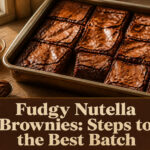
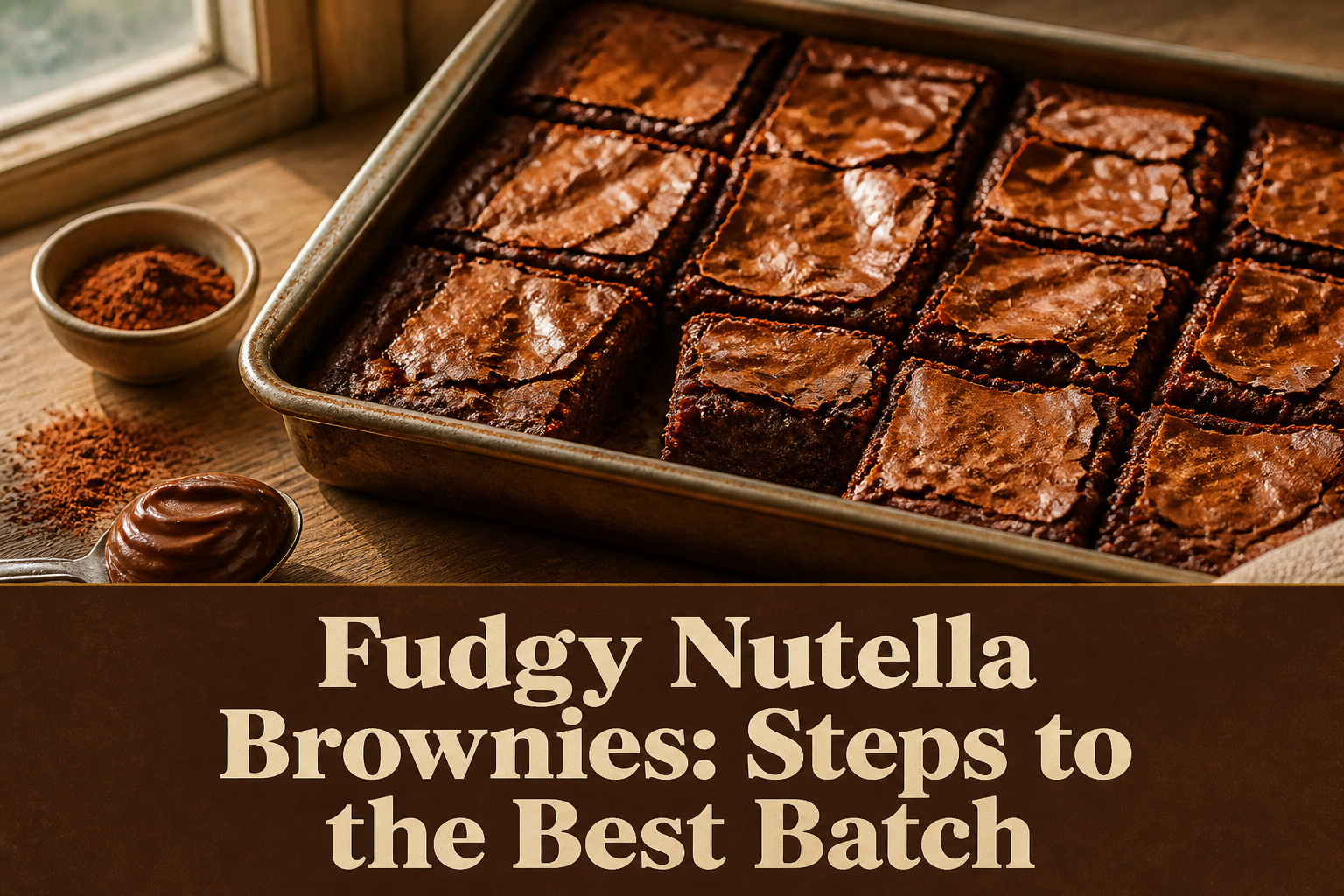
These brownies taste dense and almost underbaked in the center, with a crackly top that shatters under a knife. The difference from every other Nutella brownie recipe is the egg-sugar stage: you beat them until the mixture turns pale and thick enough to ribbon off the whisk, which builds the meringue-like surface that cracks just right. Total time from jar to pan is under ten minutes of active work, plus 25 to 35 minutes in the oven.
The catch is the toothpick test. Pull the pan while the center still jiggles and the pick carries moist crumbs, not clean metal. Wait for clean and you have cake; the residual heat finishes the bake on the counter. The 296 grams of Nutella per cup is the figure that lands the texture in the sweet spot, and sources vary on that weight by nearly a hundred grams either direction.
What Makes These Brownies Fudgy
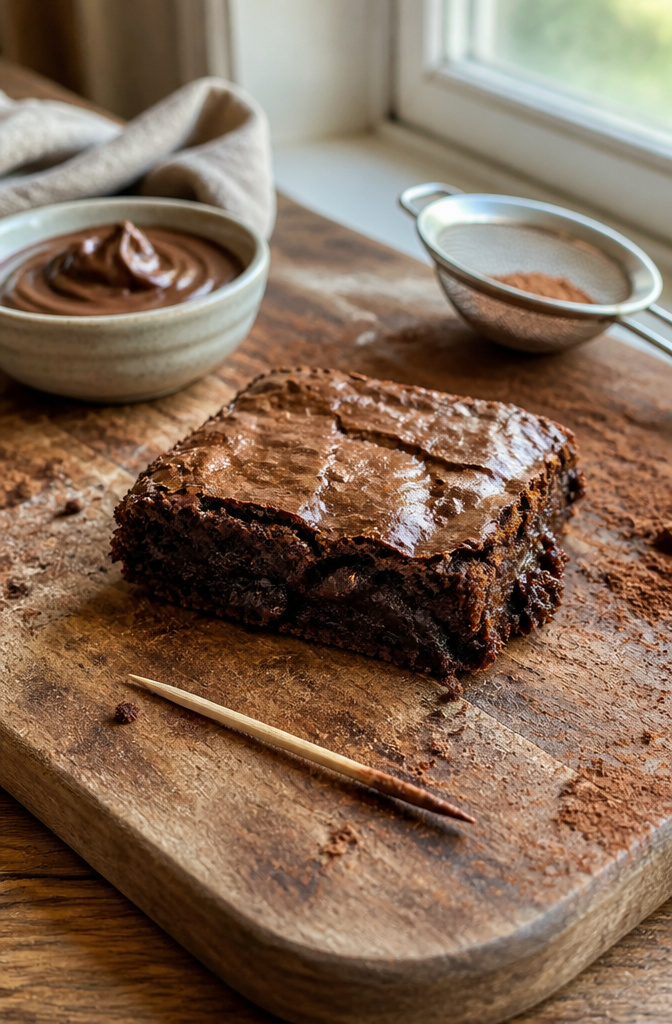
Dense, barely-set centers with crackly tops are what separate a fudgy brownie from a cakey one. The trick is stopping the bake while the center still jiggles slightly, which happens somewhere between 25 and 50 minutes depending on your pan size and whether you set the oven to 325°F or 350°F. A 9-inch square pan finishes faster than an 8-inch, sometimes by several minutes.
The toothpick test is what I watch. Poke the center, and if the pick comes out with a couple moist crumbs clinging to it, pull the pan. Clean means overbaked; wet batter means you need more time. That moist-crumb stage is the narrow window where the brownies finish setting as they cool.
Cooling matters as much as baking. The residual heat continues to cook the center even after the pan leaves the oven, so patience on the counter is what locks in that fudgy texture without drying the edges.
Bake them until they are just set for the richest, fudgiest texture.
"Just set" means the surface looks dry and slightly crackled while the middle still yields to a gentle press. That is the state to pull for, and it is narrower than most recipes admit.
Ingredients
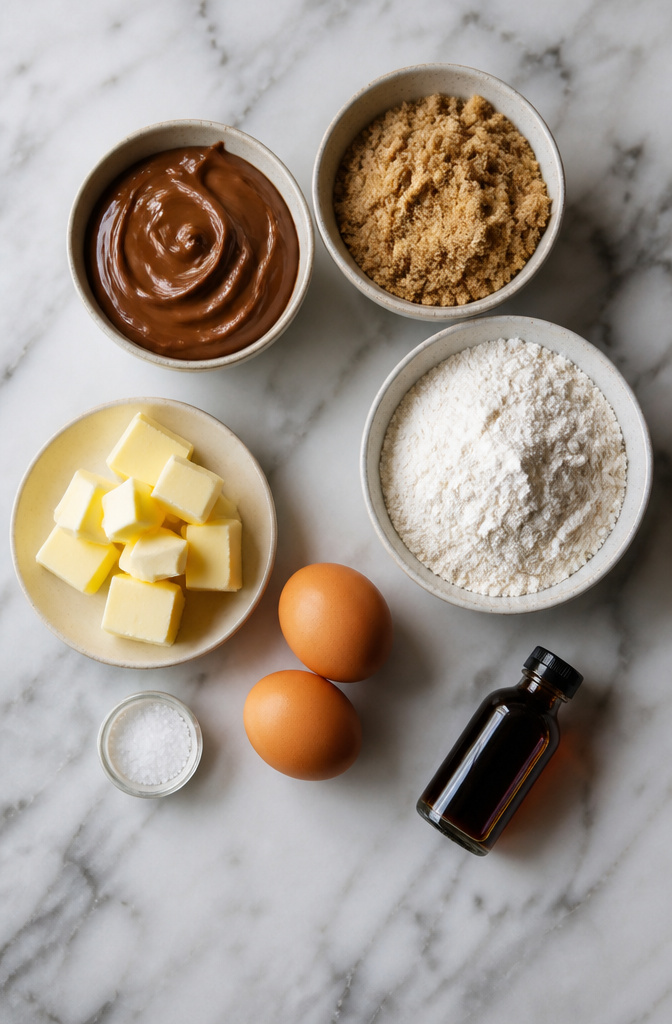
A batch of fudgy Nutella brownies comes together with just seven staples, most of which are probably in the pantry already.
- 1 cup (296g) Nutella
- 1/2 cup (113g) unsalted butter
- 2 large eggs
- 3/4 cup (94g) all-purpose flour
- 1/2 cup packed light brown sugar
- 1 tsp vanilla extract
- 1/2 tsp kosher salt
That gram weight for Nutella is worth double-checking on your own scale. Sources report it anywhere from 280g to 370g per cup depending on how firmly it’s packed, and 296g is the figure that lands in the sweet spot for the dense, fudgy texture these brownies are after.
Optional add-ins that work without changing the base ratios:
- 3/4 cup (135g) semi-sweet chocolate chips
- 1/2 tsp espresso powder
- A spoonful of cocoa powder for deeper chocolate intensity
No stand mixer, no double boiler, no chocolate to chop. The Nutella carries both the chocolate and the hazelnut, which is exactly why this recipe stays weeknight-simple.
Prep the Pan and Oven
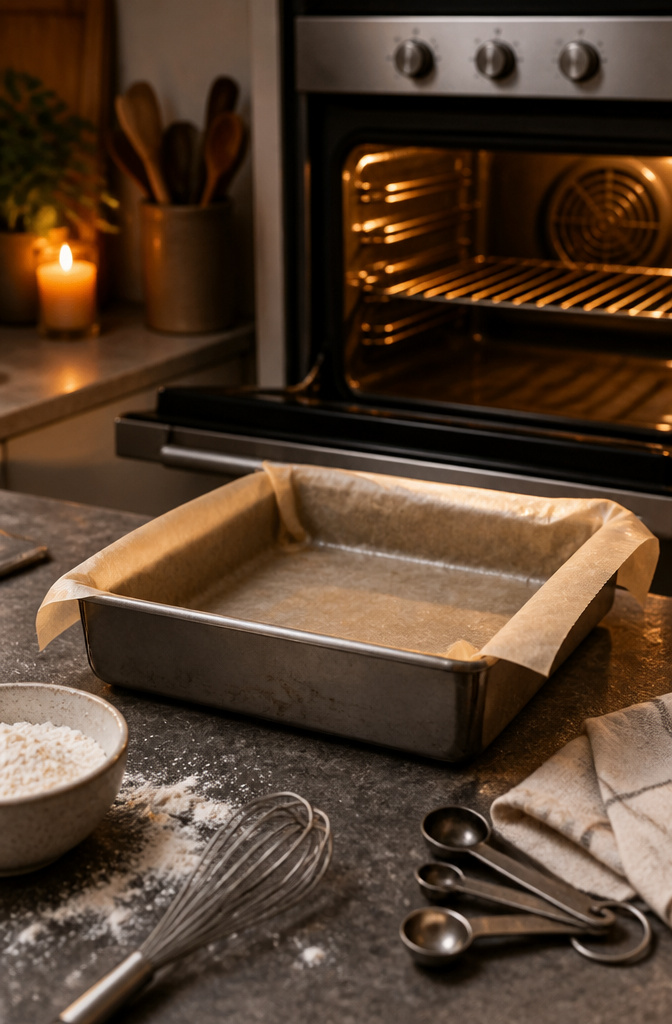
A hot oven is the enemy of fudgy Nutella brownies before the batter even goes in. I set mine to 350°F, though if yours runs hot like the one in my last apartment, 325°F keeps the edges from turning cakey while the center stays molten. An 8×8-inch pan is the right size here; anything larger spreads the batter too thin and the brownies bake through before they develop that dense, almost underbaked middle. Grease the pan first, then line it with parchment paper and leave a couple inches hanging over each side. Those overhangs are what let you lift the whole slab out cleanly instead of fighting the corners with a knife. The parchment should sit flat against the bottom and corners, so press it into the greased surface and smooth out any air pockets. Once the oven hits temperature and the pan is ready, the rest moves fast.
Melt Butter and Chocolate
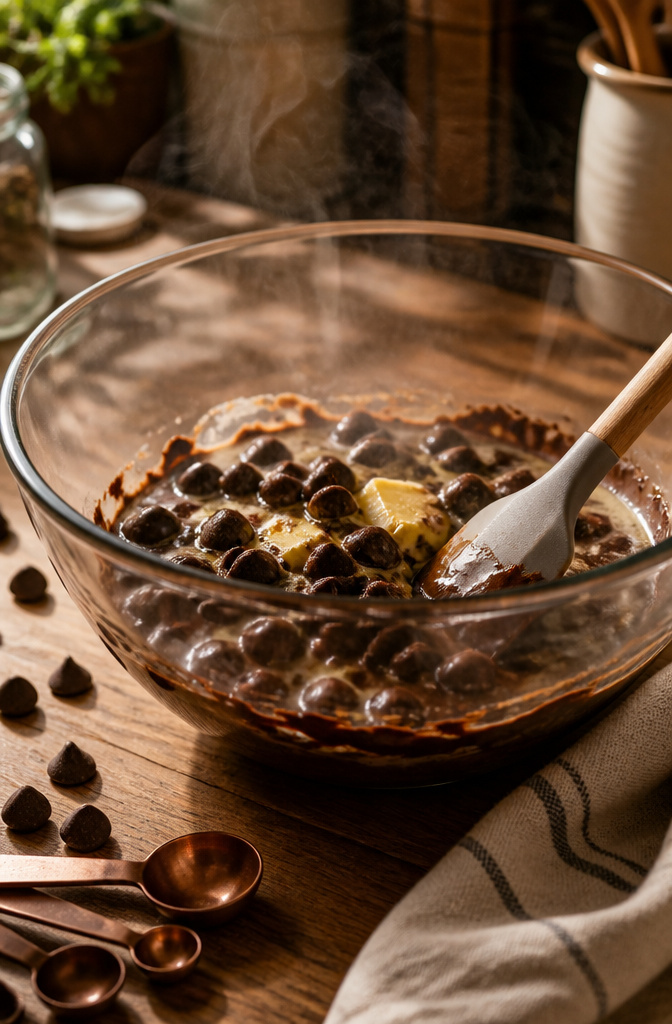
Half a cup of butter goes into a large heat-proof bowl with the chocolate. I use chips here, and they melt fine alongside the butter. The microwave works in 30-second bursts, stirring between each round until the mixture runs smooth. A double boiler on the stove is the slower, surer route if you own one and do not mind the extra dish.
Either way, let the bowl sit for a few minutes once it is off the heat. The eggs go in next, and lukewarm chocolate scrambles them into streaky little curds that ruin the batter’s texture. I have rushed this and paid for it. Ten minutes of patience on the counter saves the whole pan.
Beat Eggs, Sugar, and Vanilla
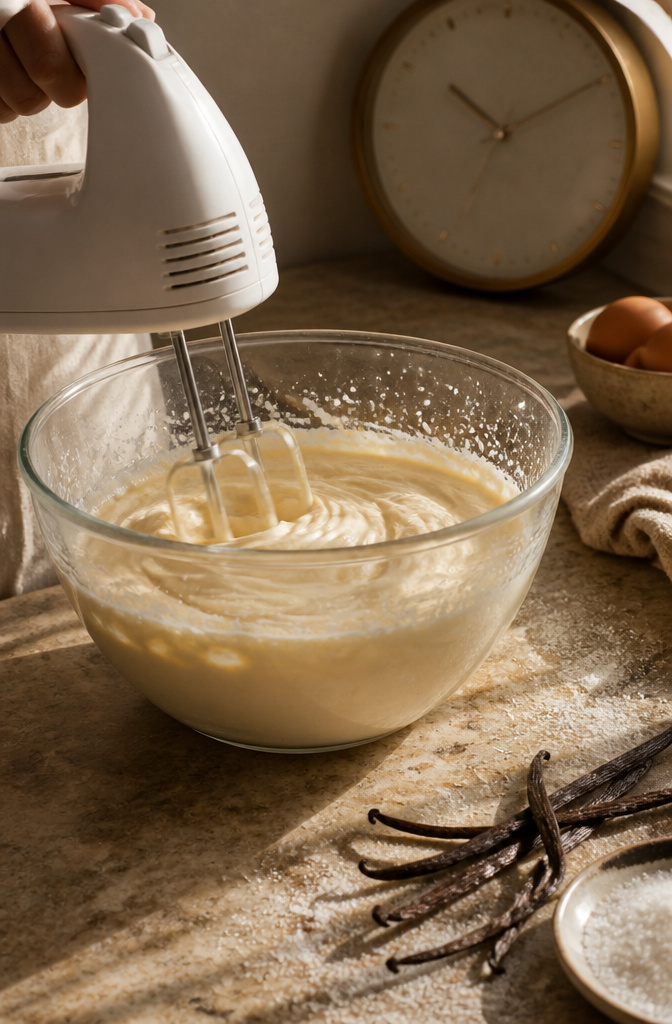
The crackly top on a fudgy brownie starts here, not in the oven. Beat the eggs, sugar, and vanilla until the mixture turns pale and thick enough to ribbon off the whisk, about two to three minutes on medium-high speed with a hand mixer. The sugar needs that time to dissolve and start aerating the eggs; rush it and you lose the meringue-like surface that cracks just right as it bakes.
I used to stop as soon as the color lightened, figuring fluffy meant fluffy enough. The brownies tasted fine but the tops stayed dull and papery. Now I set a timer and watch for the batter to hold a trail that folds back on itself slowly, like loose pancake batter with ambition. A teaspoon of vanilla goes in with the sugar so the alcohol helps carry the aroma through the fat phase later; add it after and the flavor sits on top instead of weaving in.
Room-temperature eggs whip faster and fuller than cold ones. If you forgot to pull them early, ten minutes in a bowl of warm water does the job.
Fold in Nutella
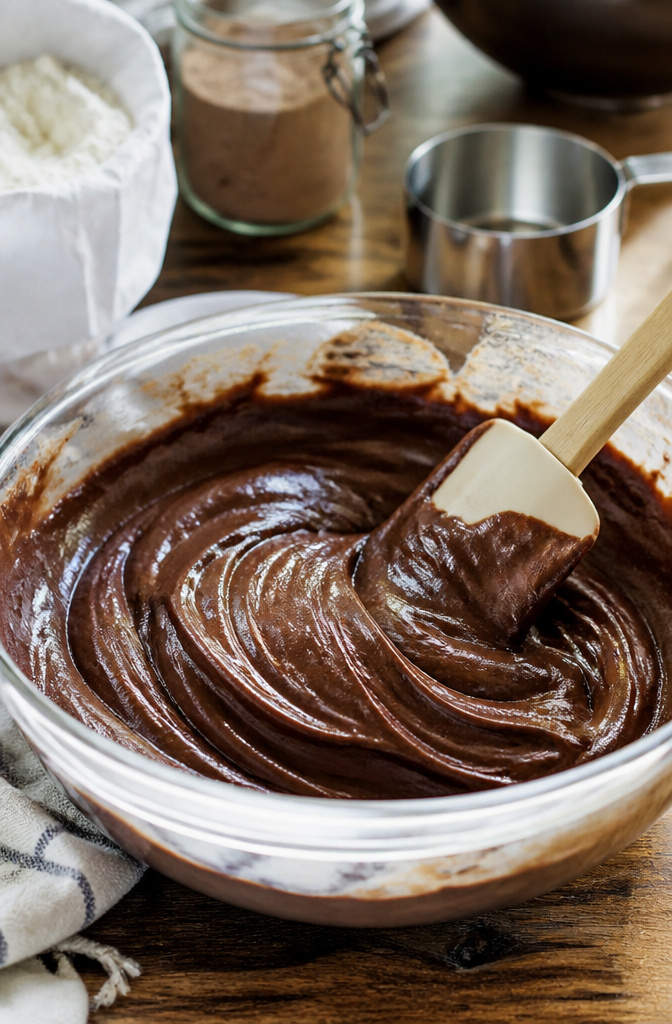
One cup of Nutella goes into the egg mixture next. I scrape the whole jar with a silicone spatula, because the last quarter-cup clings to the sides and the sugar-egg foam is too light to waste any of it. The mixer runs on medium-high for about five minutes, with two or three stops to scrape the bowl. What you’re after is a glossy, uniform batter where the hazelnut spread has fully disappeared into the eggs; streaks left now bake into uneven pockets later. The espresso powder and vanilla go in last, just a brief mix to combine. The bowl should look like thick melted chocolate, not grainy or separated — that gloss is your signal to move on to the chocolate-butter stream.
Add Dry Ingredients
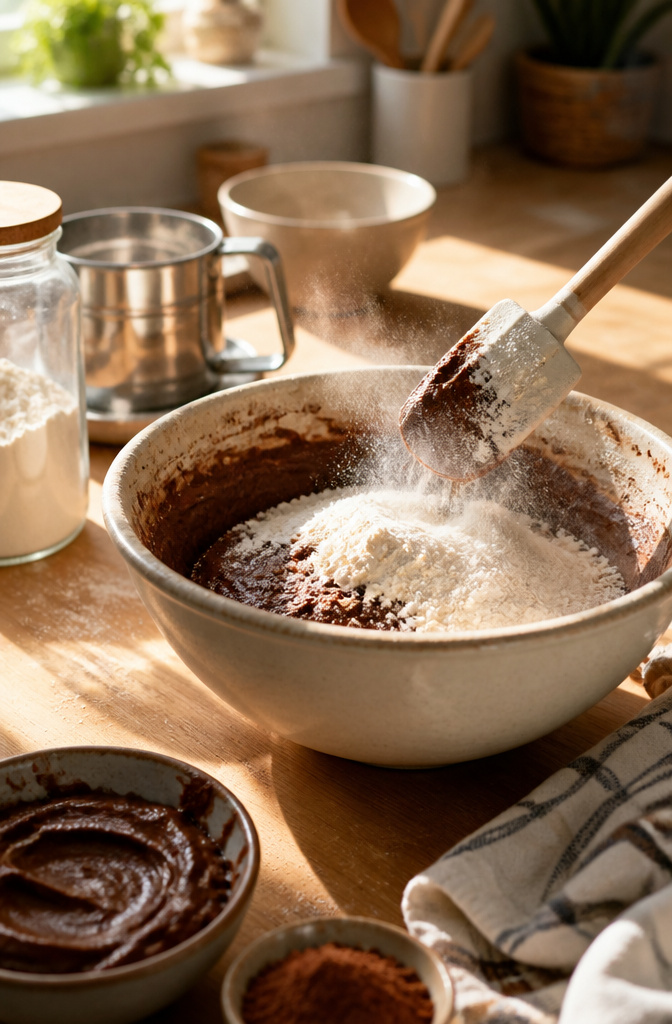
The batter at this stage is glossy and pourable, almost too loose to trust. That changes fast once the flour hits it. I sift 3/4 cup all-purpose flour and 1/2 tsp salt together first, then tip the mixture in all at once. A rubber spatula works better than a mixer here; you can feel the resistance build and stop before the gluten wakes up. The sources disagree on whether cocoa powder joins this step, but for these Nutella brownies the spread carries enough chocolate that plain flour and salt are all you need.
Ten to twelve folds usually does it. The batter turns thick and streak-free, clinging to the spatula in heavy ribbons. That visual cue matters more than counting strokes. Overmixing past this point is the mistake that shifts fudgy toward cakey, and the fix is expensive: you cannot un-develop gluten once it starts tightening. If you still see flour pockets, one or two more folds, no more. The bowl should look messy but the batter should not.
Swirl Extra Nutella on Top
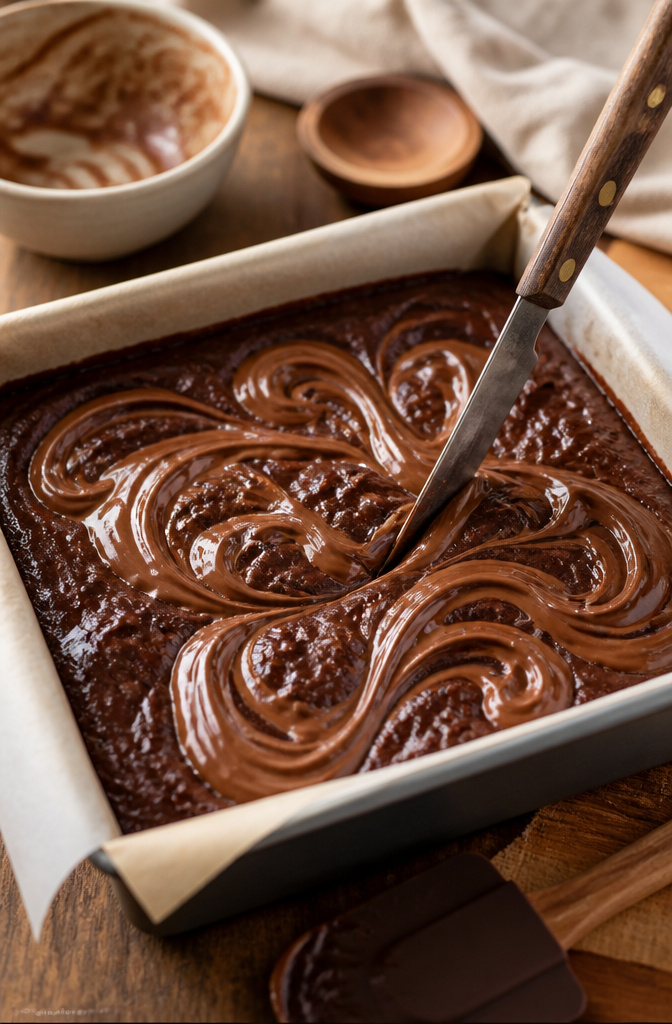
Pour the batter into the prepared pan and spread it to the corners with a spatula. The surface should look mostly even, though a few ripples won’t matter once the top bakes. Drop small spoonfuls of Nutella across the batter in a loose grid, spacing them an inch or two apart. A knife or toothpick dragged through each dollop in a figure-eight motion creates the marbled streaks. Too many passes and the swirl goes muddy; two or three cuts per dollop keeps distinct ribbons of hazelnut against the chocolate base. The pockets stay soft while the brownie around them sets, so the first bite from the center of a swirl tastes richer than the edge. I usually leave one corner plain so I can check doneness without disturbing the pattern.
Bake and Cool
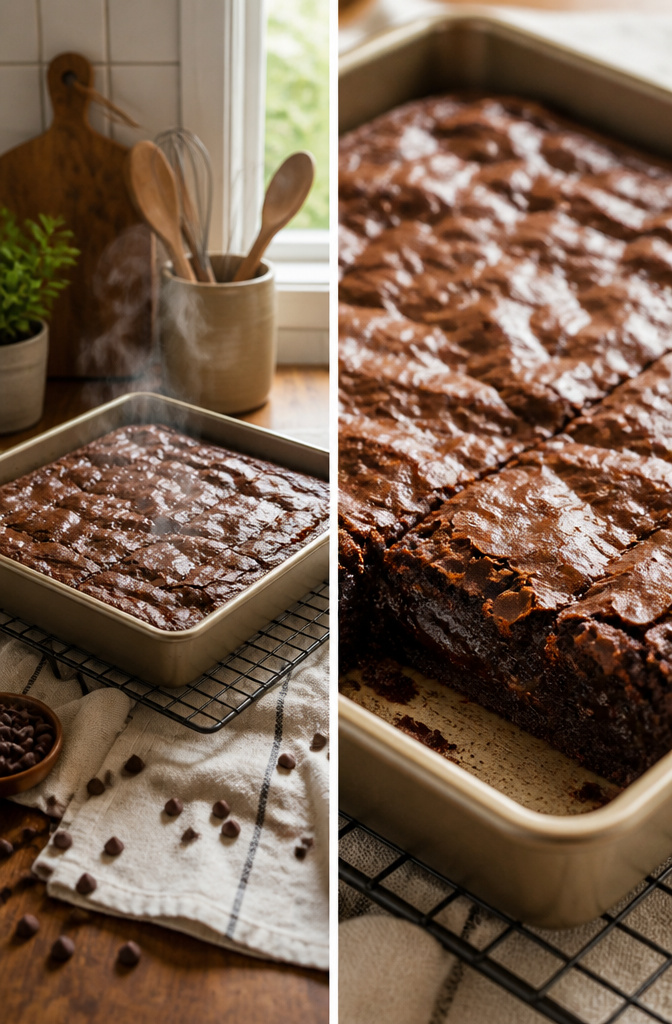
The oven at 350°F turns these from batter to brownie in 25 to 35 minutes, though a lower 325°F stretch means tacking on another 10 minutes or so. What convinced me, reading through a dozen of these recipes, is that the toothpick test matters more than the clock. Slide it into the center and pull it out looking for moist crumbs clinging to the metal, not wet batter. Clean means you overshot into cakey territory.
Let the pan cool completely before you lift the slab out and slice. I know the kitchen smells incredible and the wait feels unnecessary, but warm brownies tear instead of cutting, and the fudgy center sets into something you can actually portion. The parchment overhang you put in earlier becomes your handle now; lift straight up, transfer to a board, and use a long knife wiped clean between cuts for neat squares.
Yield and Serving
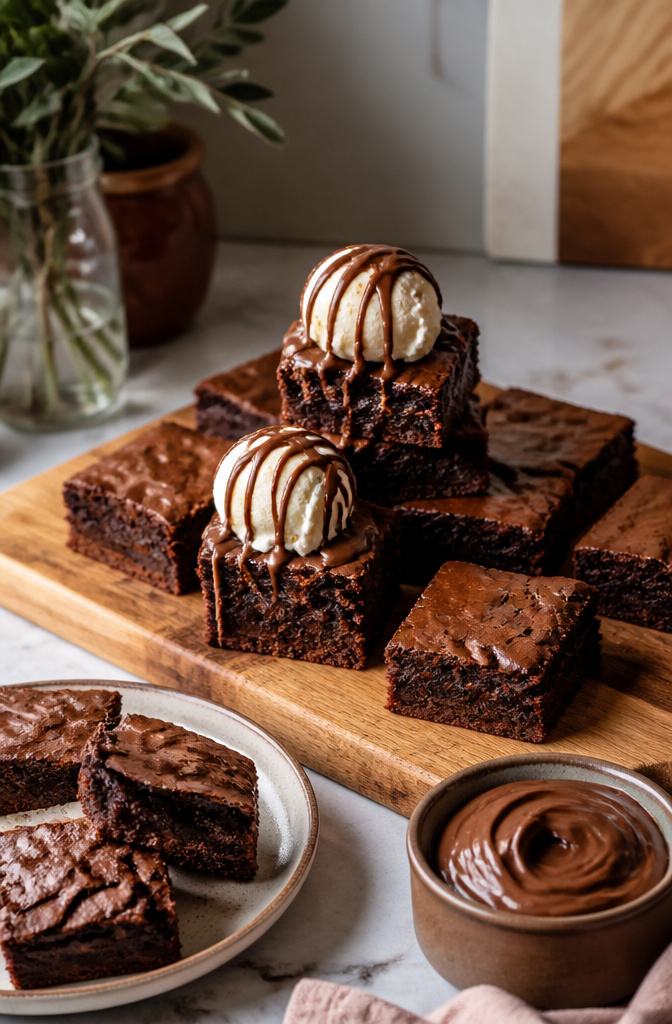
Cut these brownies into 9 generous squares if you want the full bakery-bar experience, or 16 smaller pieces when you’re feeding a crowd after dinner. The calorie count swings hard between those two choices: one large square runs about 584 calories, while a 16-piece cut drops each brownie closer to 204 calories. Both figures depend on exactly how much Nutella you swirl on top and whether you hit the measurements precisely.
Warm squares with a scoop of vanilla ice cream on top turn a weeknight dessert into something that feels planned rather than desperate. A straight drizzle of extra Nutella from the jar works too, especially if the brownies have cooled and you want that hit of hazelnut back. I keep a jar at room temperature just for this; cold Nutella fights the spoon and tears the top.
Storage
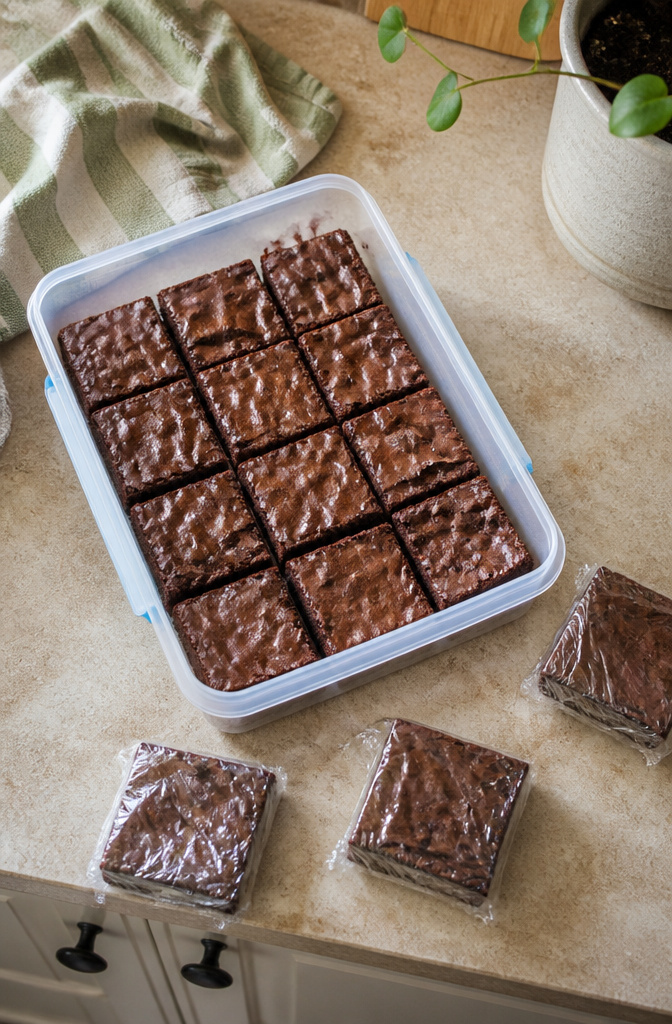
Leftover brownies sit on the counter in an airtight container and stay good for 4 to 5 days, though the edges start drying out around day three. If you need longer storage, wrap individual squares well and freeze them for 2 to 3 months. The freezer does not hurt the fudgy texture, but loose wrapping will, so press the plastic wrap right against the cut surfaces. Thawing works either way: leave them on the counter for an hour, or microwave a cold square for 15–20 seconds until just warm. The microwave route is faster and brings back that soft center, though the top loses its slight crust. I keep a small stash frozen and rotate them in; it beats finding a pan of stale brownies I forgot to eat.
Substitutions and Variations
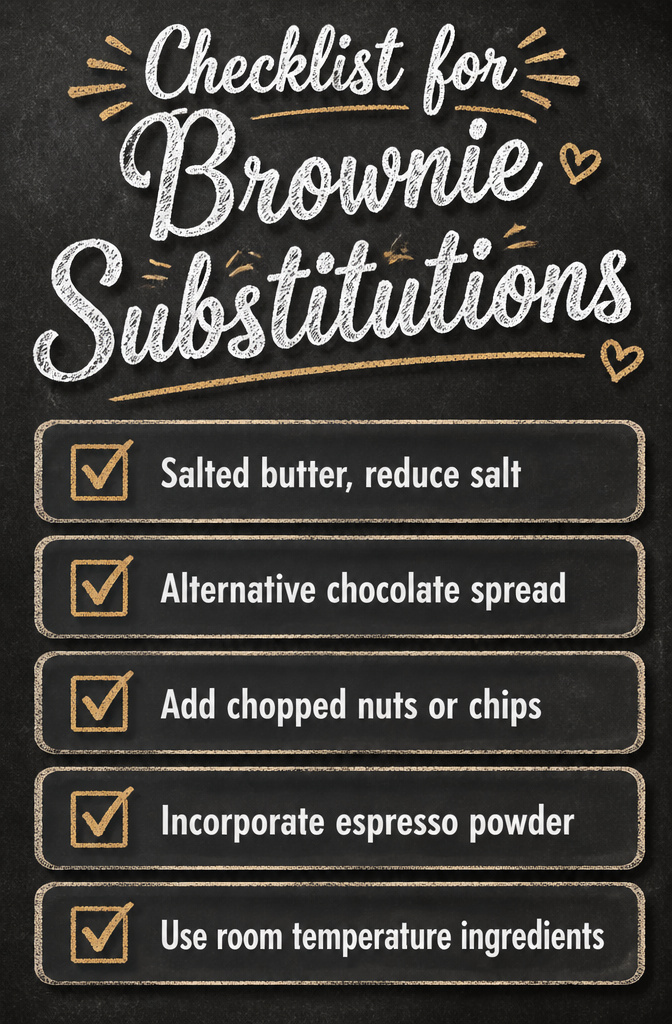
Salted butter works fine here. Just cut the added salt by half or skip it entirely, since there’s already enough in the butter.
A few other swaps that hold up:
- Any chocolate-hazelnut spread with the same loose, creamy consistency can replace Nutella. The flavor shifts slightly with the brand, but the fudgy texture stays intact.
- Chopped toasted hazelnuts, walnuts, or a handful of bittersweet chocolate chips folded in at the end add crunch without wrecking the batter.
- Espresso powder is the quiet upgrade. Half a teaspoon deepens the chocolate flavor without leaving any coffee taste behind. I started adding it after seeing it in a classic NYT version, and now I don’t skip it.
Baking Tips That Actually Matter
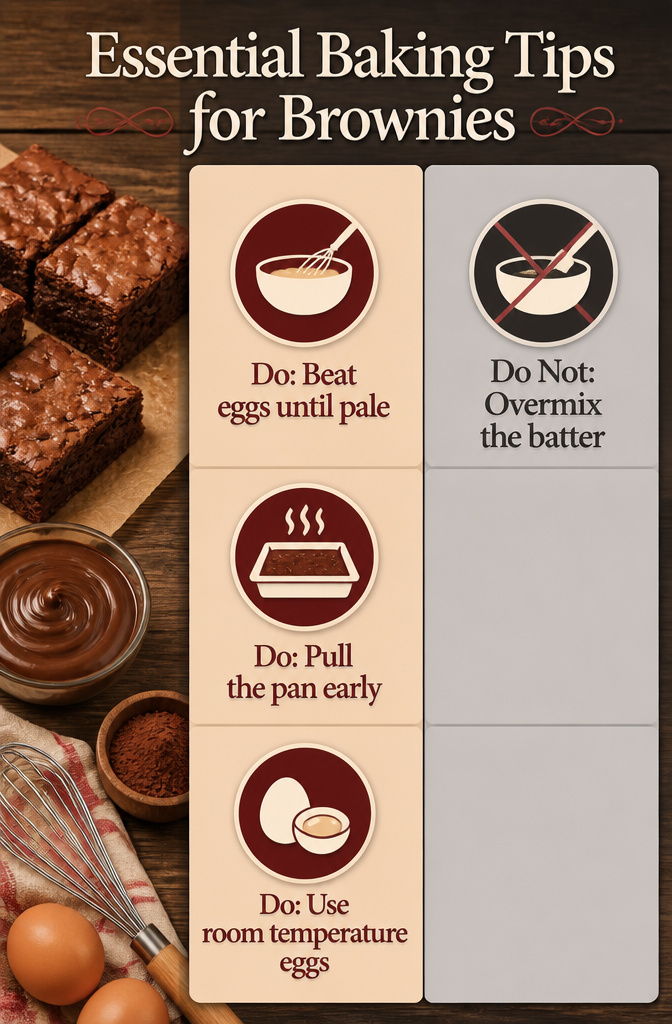
The four moves that separate a dense, fudgy center from a dry, cakey disappointment are all about when to stop and when to push harder.
- Do not overmix once the flour hits the bowl. The gluten in all-purpose flour tightens with every stir. I fold just until the streaks disappear, then I put the spatula down.
- Pull the pan early. The brownies finish baking on the counter, and that residual heat sets the middle into the soft, almost-batter texture that defines fudgy Nutella brownies. The toothpick should still carry a few moist crumbs.
- Beat eggs and sugar until the mixture turns pale and thick. This is what builds the meringue-like film that rises to the surface and cracks into that glossy, crackly top. By hand, my arm is usually sore by the time it looks right.
- Room-temperature eggs blend without seizing the batter. Cold eggs from the fridge will stiffen the melted butter and Nutella into little flecks that never smooth out. I set them on the counter while the oven preheats.
Frequently Asked Questions
How do I make fudgy brownies?
Stop baking while the center still jiggles slightly, usually between 25 and 35 minutes at 350°F. The toothpick test is your best guide: pull the pan when the pick comes out with a couple moist crumbs clinging to it, not clean and not wet. Let them cool completely on the counter so residual heat finishes setting the center without drying the edges.
Can I freeze Nutella brownies?
Yes, wrap individual squares well and freeze them for 2 to 3 months. Press the plastic wrap right against the cut surfaces so loose wrapping cannot hurt the fudgy texture. Thaw on the counter for an hour, or microwave a cold square for 15 to 20 seconds until just warm.
What is the best way to store brownies?
Keep leftover brownies in an airtight container at room temperature for 4 to 5 days, though the edges start drying around day three. For longer storage, wrap individual squares well and freeze them for 2 to 3 months. Press the plastic wrap directly against the cut surfaces to protect the texture.